Commercial concrete floor resurfacing: A Practical Guide
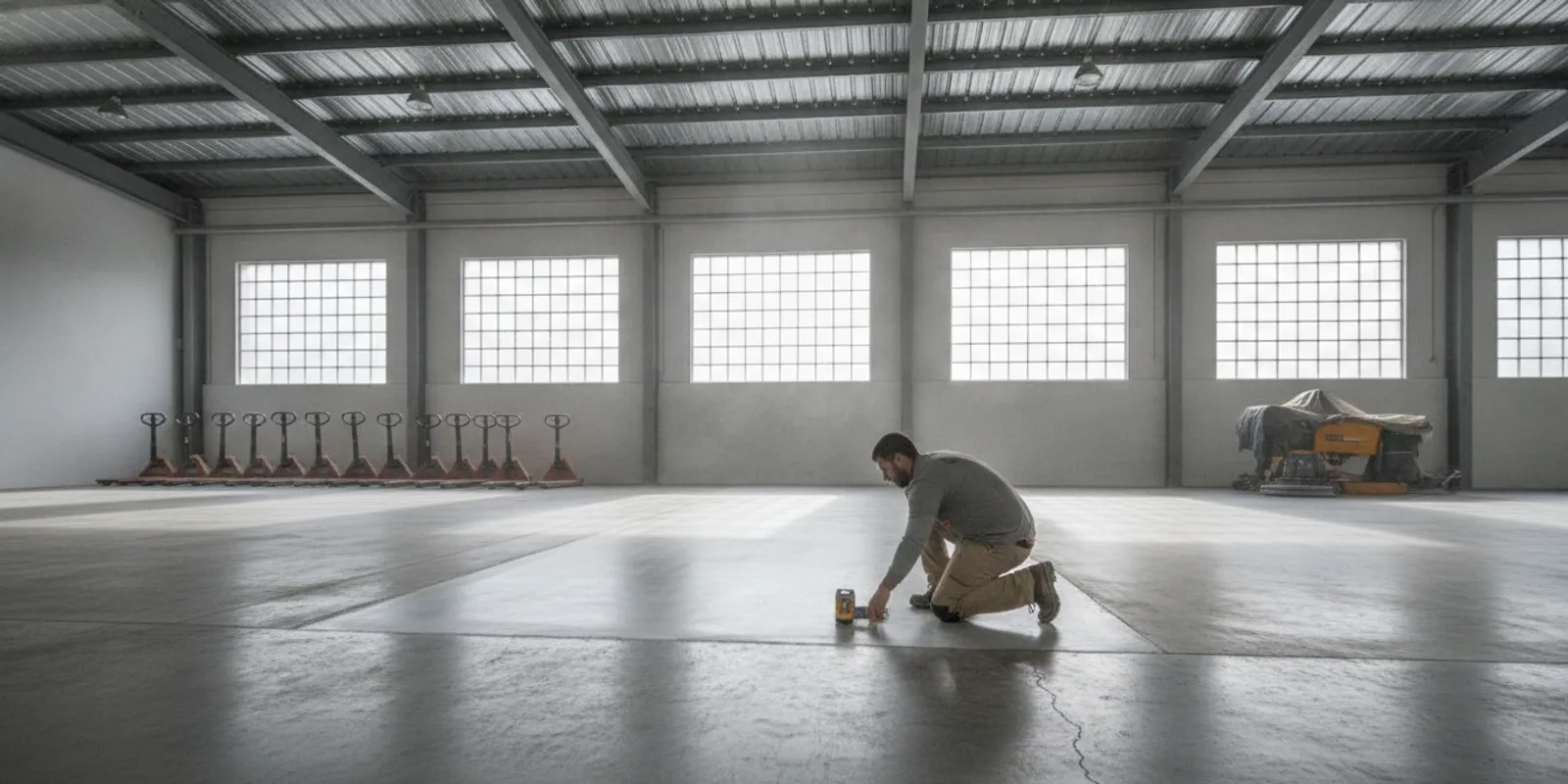
Commercial concrete floor resurfacing can help address a worn, uneven-looking, or difficult-to-maintain floor, but the right approach depends on the slab and how the space operates. Before choosing a finish, identify what is wrong with the existing floor, what the area must withstand, and how much downtime the facility can manage.
Call to discuss your flooring project
What does commercial concrete floor resurfacing mean?
Resurfacing is a broad term for preparing an existing concrete floor and applying a new surface treatment or finish. The scope may be limited to grinding and sealing, or it may include repairs and a coating system. It is not automatically the same as replacing the slab, and it does not mean every surface can be covered without preparation.
The existing concrete is the base of the project. Its condition, previous coatings, cracks, contamination, moisture conditions, and surface profile can all affect which options are worth considering. A finish that looks appropriate in one setting may not suit a kitchen, warehouse, shop, or back-of-house space with different traffic and cleaning needs.
Start with the floor’s condition and the facility’s needs
Before comparing finishes, make a short list of the problems the project needs to solve. Note whether the floor has peeling coating, visible wear, stains, cracks, patched areas, dusting, or spots that are hard to clean. Record where those issues occur and whether they are changing. These observations help frame an assessment; they are not a substitute for examining the slab.
Then describe how the area is used. A warehouse with rolling equipment has different demands from a retail floor where appearance matters, or a commercial kitchen where cleaning routines and moisture deserve attention. Include the types of traffic, likely spills, cleaning methods, and any traction concerns. Avoid selecting a system based on a single feature, such as color or gloss, without considering daily use.
- Warehouse or shop: Discuss traffic patterns, equipment, abrasion, and exposure to oils or other substances relevant to the operation.
- Retail or office: Consider the desired appearance, expected foot traffic, cleaning routine, and whether the existing concrete might be a candidate for polishing or sealing.
- Kitchen or wash-down area: Explain the cleaning process, moisture exposure, and traction needs. Ask how the proposed system addresses those conditions rather than assuming every coating performs the same way.
- Mixed-use facility: Identify separate zones. One finish may not be the best fit for every room or work area.
Which resurfacing approach might be considered?
Commercial floor work can involve different treatments. An assessment should match the preparation and finish to the slab and intended use, rather than treating “resurfacing” as one specific product. Alliance Epoxy Flooring offers commercial epoxy floor coatings, concrete polishing, and grind-and-seal among its flooring services; suitability depends on the particular project.
- Grinding and sealing: Grinding can remove some surface material or old coatings, while a sealer provides a finished surface. The appearance and performance depend on the slab, preparation, and selected sealer.
- Concrete polishing: The existing concrete is mechanically refined to a selected sheen. It may be considered where the slab is suitable and the desired result is a finished concrete appearance.
- Epoxy coating: A coating system can provide a finished surface with solid-color or decorative options. Preparation and system selection matter, and the floor’s use should guide the discussion.
- Repair before finishing: Cracks, damaged areas, old coatings, or other surface concerns may need attention as part of the project scope. Covering a problem is not the same as resolving its cause.
These categories are not interchangeable guarantees. An installer can review the surface, ask about operating conditions, and explain which options appear appropriate and what limitations should be considered. Ask for the product or system details relevant to the proposed use rather than relying on a general label.
What happens during a resurfacing project?
A useful project conversation follows the floor from assessment through return to use. The exact work varies, but these are practical topics to cover before approving a scope:
- Describe the site. Share the facility type, approximate area, room layout, operating schedule, and the issues you want addressed. Photos can help explain visible conditions, but do not replace an on-site review when one is needed.
- Review the slab and existing finish. Discuss cracks, patches, old coating, contamination, moisture concerns, and any areas with different conditions. Ask what further checks may be needed before system selection.
- Confirm preparation and repairs. The written scope should make clear what preparation is proposed and which repairs are included or excluded. Ask how edges, transitions, drains, joints, and adjacent areas will be handled where applicable.
- Compare finish options. Discuss appearance, cleaning, traction considerations, exposure, and maintenance expectations. Request the system details relevant to the proposed use.
- Plan site access and downtime. Ask when work areas need to be cleared, how the project may be phased, and when each area can be used again. Timing depends on the project and product conditions, so get the contractor’s project-specific plan.
- Review the estimate. Confirm the area covered, preparation, repairs, finish, exclusions, access assumptions, and any work that could change after the slab is examined. A written estimate should let you compare scopes, not just headline descriptions.
What should you ask before choosing a contractor?
Clear questions can expose differences between proposals and reduce surprises. Ask who will assess the floor, what preparation is included, how the proposed finish suits the facility’s operation, and what could require a scope change. Ask how the work area will be protected and what cleaning or maintenance guidance will be provided.
Also ask for an explanation of any performance or compliance claim that matters to your facility. Requirements vary by use and jurisdiction, and a general product description is not proof that a particular installed floor meets a specific requirement. If your site has written specifications, safety policies, or inspection criteria, share them before the scope is finalized.
Concrete is made from cement, fine aggregate, coarse aggregate, and water, as described in the Kentucky Transportation Cabinet’s concrete specification. That basic material description does not determine whether a particular slab is suitable for a finish; its actual condition and site requirements still need assessment.
How can you prepare for an estimate?
Gather the facility location, approximate square footage, photos of representative problem areas, and a simple description of daily use. Note whether the space can be emptied, whether work must be phased, and any deadlines or operating constraints. If you have records of prior coatings, repairs, leaks, or maintenance, make them available.
Alliance Epoxy Flooring offers project assessments and free estimates. An estimate can clarify the proposed work and relevant options; it should not be treated as a fixed recommendation before the floor and project conditions are understood. Ask what information the estimator still needs and which assumptions the proposal makes.
Call to discuss an estimate for your commercial floor
Frequently asked questions
Can every concrete floor be resurfaced?
No. The existing slab, prior coatings, damage, moisture conditions, and intended use all matter. An assessment is needed to determine whether preparation, repairs, a particular finish, or a different scope should be considered.
Is resurfacing the same as installing epoxy?
No. Resurfacing describes work on an existing concrete floor and may involve grinding and sealing, polishing, an epoxy coating, or preparatory repairs. Epoxy is one possible finish, not a synonym for every resurfacing project.
How long will the work take?
There is no single duration for every site. Area size, surface condition, preparation, chosen system, site access, and product requirements can all affect the schedule. Ask for a project-specific work plan and when each area is expected to return to use.
What information helps make an estimate useful?
Share the floor area, facility use, visible issues, existing finish if known, photos, access limits, and schedule constraints. These details help frame a review, while the slab itself may still need to be examined before the scope is confirmed.
Choosing a commercial floor finish starts with understanding the concrete and the work happening above it. A clear assessment and written scope can help you compare options based on the needs of your facility.