Concrete floor repair cost: A Practical Guide
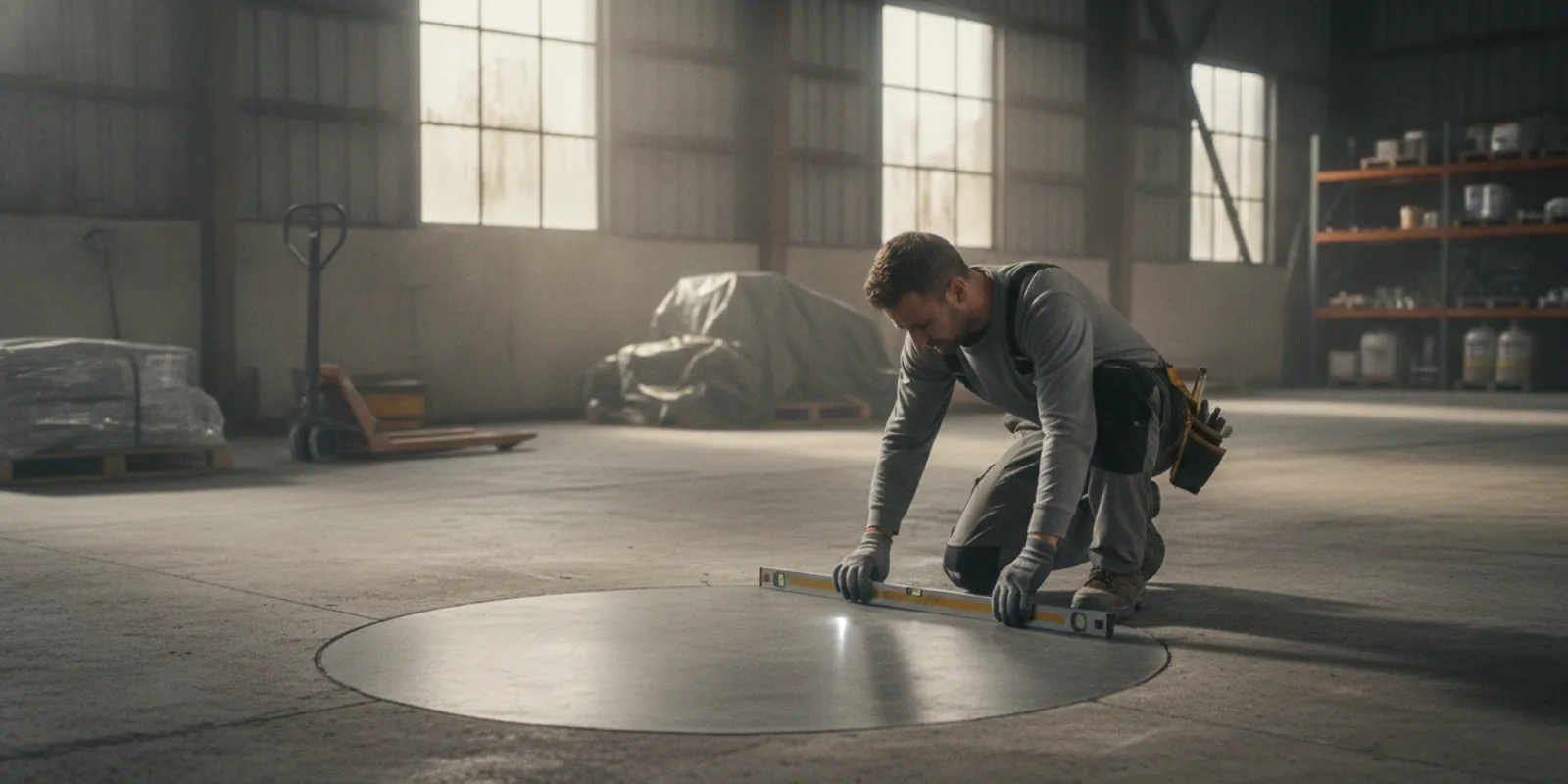
Concrete floor repair cost depends on what is damaged, how much preparation the slab needs, and whether the repair can stand alone or belongs in a larger flooring system. For commercial and industrial properties, a low-spot repair and a worn, failing floor are different projects, so a useful estimate starts with the condition and intended use of the space. Learn about commercial epoxy flooring options and concrete polishing services when comparing a spot repair with a broader floor treatment.
Request a free project estimate
What affects concrete floor repair cost?
There is no single per-square-foot price that describes every concrete repair. A contractor needs to understand the slab, the damage, the area involved, and the finish expected afterward. These factors commonly change the scope and estimate:
- Type and depth of damage. A shallow surface defect differs from a deeper crack, broken edge, or area where concrete is loose or deteriorated. The cause matters too: a repair may not last if the condition behind it remains unresolved.
- Amount of affected floor. The visible defect may be small, while nearby areas also need preparation or a consistent finish. Conversely, a localized repair may be enough when the rest of the slab is sound.
- Surface preparation. Dust, old coatings, residues, uneven areas, or weak concrete can affect preparation before a repair or finish is installed.
- Moisture and site conditions. Moisture concerns, drainage, temperature, and operating conditions can influence system suitability and the work plan. Assessment depends on the site.
- Access and scheduling. Equipment access, operating hours, occupied areas, and coordination around staff or deliveries may affect planning. Ask how the work area will be isolated and when it can be used again; timing depends on materials and site conditions.
- Finish requirements. Some buyers need a practical repaired surface. Others want a coating or sealer across the floor for a more uniform appearance or maintenance needs. That broader scope changes the project from repair alone.
Is a repair enough, or does the floor need a new finish?
A repair addresses a defect or damaged area. It does not automatically restore the look or performance of the entire floor. If the surrounding concrete is in good condition and the goal is to correct a localized problem, a limited repair may be appropriate. If the slab has widespread wear, old coating failure, or inconsistent surfaces, assess repair alongside a larger finishing option.
For example, grind-and-seal work involves grinding existing concrete or old coatings and applying a sealer. Alliance's published cost guide gives an indicative industry budgeting range of $2–$5 per square foot for grind-and-seal. That is a guide for this flooring system, not a price for repairing a crack or a guarantee of project total. Site preparation, specifications, and access affect the actual written quote.
Other published indicative ranges include $3–$6 per square foot for basic epoxy, $5–$10 for decorative flake, $8–$15 for metallic or high-end epoxy, and $4–$9 for polished concrete. These are system-level budgeting figures, not interchangeable repair rates. A repair may be one step in a larger project, and the right choice depends on the slab and how the facility uses the space.
How should a commercial buyer compare estimates?
Compare the work included, not just the headline number. Two estimates may cover different areas, preparation steps, materials, or finishes. Ask each contractor to describe the observed condition and explain what is included and what could require a revised scope.
- Define the area. Share approximate dimensions and mark where damage appears. Note whether adjacent areas also have wear, coating failure, or unevenness.
- Describe how the floor is used. Explain traffic, equipment, spills, cleaning routines, and operating schedules. A warehouse, kitchen, shop, and office may call for different considerations.
- Ask about preparation and repair scope. Request a plain-language explanation of what will be repaired, what preparation is expected, and whether surrounding flooring is included.
- Confirm the proposed finish. If a coating, sealer, or other treatment is included, ask what area it covers and why it suits the intended use. Do not assume a repair and full-floor finish are equivalent.
- Clarify access and use. Ask what access is required, how the facility should prepare, and what conditions determine when the area can return to service. Avoid relying on a general timing promise without project details.
- Get the scope in writing. The estimate should identify the work area, preparation, selected system where applicable, exclusions, and factors that could affect final price.
What should you prepare before requesting an estimate?
Useful information helps a flooring professional assess whether the request is for a localized repair, broader surface preparation, or a new finish. Gather approximate floor area, photos of damaged sections, a short description of when the problem appeared, and any known history of coatings or repairs. Also note whether the space is occupied, what equipment uses it, and scheduling constraints.
Photos can help explain the issue, but they cannot confirm all conditions beneath or around the visible surface. An on-site assessment may be needed to understand the slab and recommend a suitable scope. If moisture or the source of recurring damage is uncertain, mention that rather than assuming a surface patch will resolve it.
For work in an active facility, coordinate access and ask how the work area will be managed to protect people nearby. The Occupational Safety and Health Administration provides general workplace safety information; site-specific procedures should be discussed for the project.
Does a lower repair estimate always mean better value?
Not necessarily. A lower figure may cover a smaller area or fewer preparation steps, or leave the surrounding floor unchanged. That can be reasonable for a limited repair, but may not meet the buyer's goal if the floor needs a consistent appearance or a larger area has deteriorated. A higher estimate may include broader preparation or a finish beyond the repair itself, so compare like with like.
Ask what condition the proposal is intended to address and what it does not cover. If the same issue returns, the underlying cause may need attention. A clear scope lets a facility decide whether to start with a localized repair, consider a broader flooring system, or investigate further before work begins.
Consider the operating impact as well as the proposed work. A repair in a seldom-used corner may be straightforward to schedule, while a damaged route used by forklifts or deliveries may need coordination around access and work zones. Share peak operating periods, alternate routes, and any areas that cannot be closed at the same time. The contractor can then explain whether the requested sequence is feasible; do not assume that every material or scope has the same return-to-use interval.
It can also help to separate immediate needs from longer-term goals. A facility may need to address a broken or unsafe-feeling area first, then decide whether to improve appearance across a larger section. Ask whether the estimate treats those as separate phases and what preparation would be shared or repeated. This makes it easier to compare a focused repair against a broader renovation without treating unlike scopes as competing prices.
Call to discuss your concrete floor project
Frequently asked questions
Can concrete floor repair cost be estimated from a photo?
A photo can show visible damage, but may not reveal depth, nearby concrete condition, or preparation needs. Treat a photo discussion as an initial review, not a substitute for a site-specific scope when one is needed.
Does a repair estimate include coating the whole floor?
Not automatically. Confirm whether the quote covers only a damaged section or includes preparation and a finish over a larger area. The written scope should state included work and exclusions.
Is the published grind-and-seal range a repair price?
No. The $2–$5 per-square-foot figure is an indicative industry budgeting range for grind-and-seal work. It is not a fixed rate for concrete repair; actual quotes depend on condition, preparation, specifications, and access.
The most useful way to understand concrete floor repair cost is to define the damage, explain how the space operates, and compare written scopes that address the same work.