 Alliance
Concrete Grind and Seal: A Practical Guide
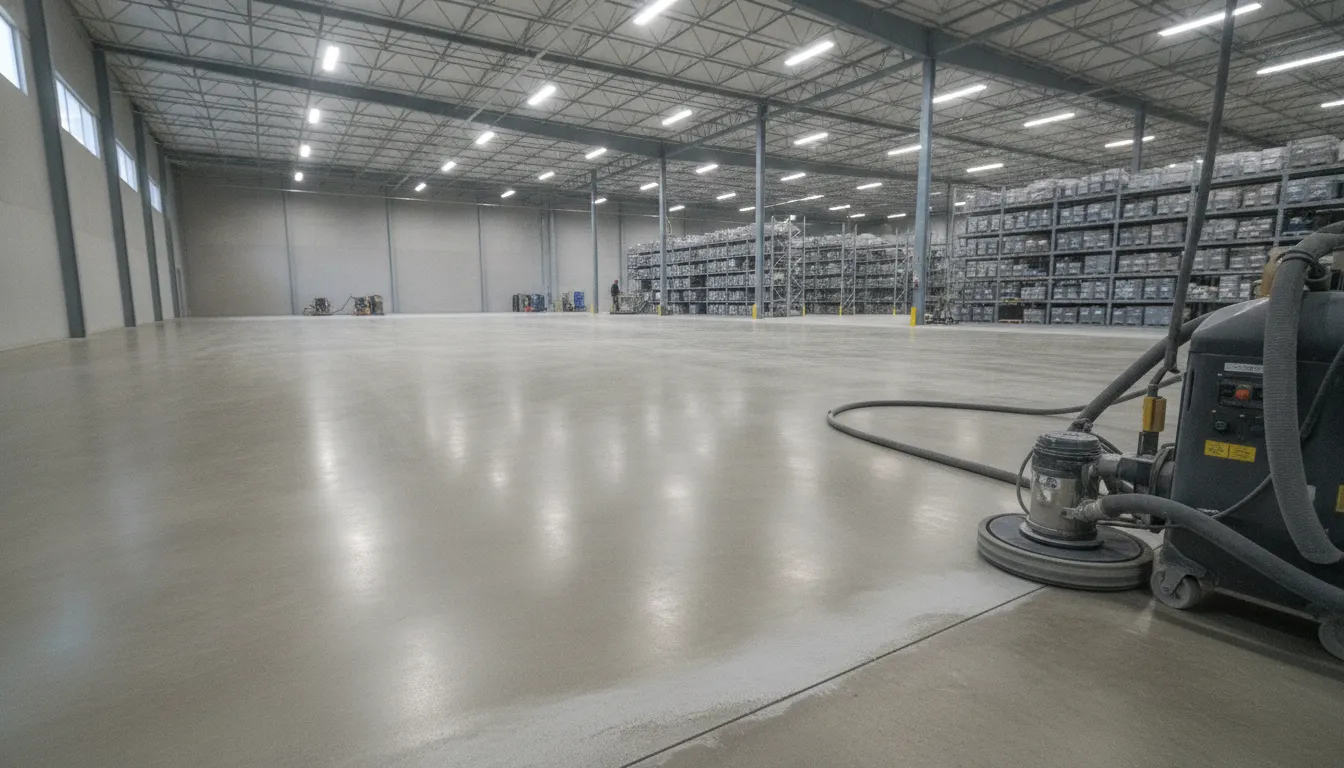
Concrete grind and seal can give a commercial floor a cleaner, more finished appearance without covering the slab with a thick resin system. The process still depends on the concrete below it, the sealer selected, the finish expected, and how the facility operates. This guide explains what facility managers and property owners should review before requesting a quote. Alliance Epoxy Flooring installs the finish for commercial and industrial spaces in New York, New Jersey, and Pennsylvania. There is no walk-in showroom. A reply within 24 hours means someone gets back to you. It does not mean the floor is quoted or finished that day.
Call (800) 518-9080 to Get a Free Estimate
For a closer look at the installed service, see Alliance Epoxy Flooring's grind-and-seal flooring service page. It describes the finish as an option for warehouses, distribution spaces, garages, workshops, retail areas, showrooms, and back-of-house floors across New York, New Jersey, and Pennsylvania.
What concrete grind and seal means
Grind and seal starts with mechanical preparation. Diamond tooling removes weak surface material, residue, old coatings where appropriate, and selected surface imperfections. The floor is then cleaned and treated with a sealer chosen for the slab and the space. The finished surface keeps the visual character of concrete while adding a defined sheen and a protective surface.
The phrase can describe more than one sealer approach. A penetrating product works within the concrete rather than forming a conventional film. A topical sealer sits at the surface and becomes part of the wear system. The appearance, maintenance needs, moisture considerations, and future repair approach can differ between those choices. A useful proposal should identify the system instead of using only the words “grind and seal.”
Grinding is not the same as polishing. Polishing continues through progressively finer diamond abrasives and develops the desired sheen from the concrete itself. If the facility is comparing the two finishes, Alliance's concrete polishing service page is a useful starting point. The better choice depends on the slab, traffic, appearance, access, and maintenance plan.
Where this finish can make sense
Grind and seal may be considered for a commercial floor when the existing slab is a reasonable base and the owner wants to keep a natural concrete appearance. Common evaluation settings include:
- Warehouses and distribution areas where a cleanable concrete surface and access plan matter.
- Workshops and utility spaces where the owner wants a finished floor without a decorative resin build.
- Retail spaces, showrooms, and offices where matte, satin, or gloss appearance is part of the decision.
- Back-of-house areas where the floor must be assessed alongside cleaning, spills, traffic, and downtime.
- Garages and smaller commercial areas where slab condition and the requested appearance can be reviewed together.
This is not a universal solution. Deep contamination, active moisture, extensive spalling, movement, or a slab that cannot support the requested appearance may change the recommendation. A sealed surface also does not repair structural problems in the concrete underneath it.
Five questions to answer before the work is quoted
1. What preparation does the slab need?
Ask what the grinding is expected to remove and what it will leave visible. Old adhesive, paint, curing residue, weak concrete, oil, patching, cracks, and high spots can require different preparation decisions. Deep oil staining may remain visible after grinding. Repairs can also remain part of the finished character unless the scope includes a specific blending approach.
Ask whether dust control, edge work, crack treatment, joint treatment, and cleanup are included. Grinding concrete can produce silica-bearing dust. OSHA's construction silica rule, 29 CFR 1926.1153, lists floor grinders in Table 1. The listed controls are an integrated water feed or a dust collector that meets the tool maker's airflow, with a 99 percent filter and a filter-cleaning mechanism. Indoors, loose dust between passes is removed with a HEPA-filtered vacuum. A square-foot number without a preparation scope does not make two proposals comparable. The contractor should also explain how fixed equipment, shelving, drains, thresholds, and tight access affect the work area.
2. Which sealer will be used?
Request the product family and the role it plays in the system. A penetrating sealer and a topical film do not age or get repaired in the same way. A film may provide a different sheen and cleaning feel, but it can also become the part of the floor that wears under traffic. The right product depends on the operating conditions and the manufacturer's technical requirements.
Ask whether the system is intended for interior or exterior exposure, what cleaning products it tolerates, how it handles the expected traffic, and what maintenance the owner should plan. Those questions are more useful than choosing a sealer by sheen alone.
3. What finish should the facility expect?
“Smooth” and “shiny” are not specifications. Ask for a sample or a defined description of the expected sheen, aggregate exposure, color variation, repair visibility, and texture. A natural gray slab can vary from room to room. Existing patches and past repairs may remain visible, and a clear sealer can change the way color and grinding marks appear.
If a decorative color is the priority, compare the grind-and-seal scope with a system designed for staining or coating. Alliance also provides concrete staining for projects where color treatment and sealing are the main objectives. Staining is not the same process as grind and seal, so the slab assessment should start with the look the owner wants.
4. How will moisture and site conditions be evaluated?
Moisture is a project question, not a detail to leave until installation day. The National Ready Mixed Concrete Association explains that slab moisture can contribute to bond-related failures of non-breathable floor coatings. It also describes moisture sources and testing considerations in CIP 28: Concrete Slab Moisture. The appropriate test and acceptance criteria depend on the proposed system and its technical data.
Ask whether the assessment will consider moisture moving through the slab, drainage, recent cleaning or water exposure, and the sealer's vapor and bond requirements. A contractor should not promise that a sealer will solve an unresolved water source. Grind-and-seal is not the same service as floor waterproofing. If moisture conditions do not fit the proposed system, the scope may need mitigation or a different flooring approach.
5. What will the operating plan look like?
Tell the installer how the space is used. Forklift routes, pallet traffic, foot traffic, rolling loads, cleaning equipment, chemical exposure, temperature, ventilation, and shift changes can affect the recommendation. Share where work can be staged and how equipment or inventory will be moved. A retail floor, warehouse aisle, workshop, and back-of-house room do not have the same access or return-to-service needs.
Ask when the area can be walked on, when routine cleaning can resume, and when heavier traffic can return. These are system- and site-dependent conditions, not universal deadlines. On Alliance projects, most grind-and-seal floors are walk-on ready within 24 hours, with full service in 1 to 2 days, depending on the sealer and the site. That window is typical, not a deadline. The written plan should distinguish between cure time, access time, and full service use.
A practical review sequence for facility buyers
Before asking for bids, gather the information that will shape the recommendation. This keeps a finish discussion from turning into a comparison of labels that mean different things to different contractors.
- Map the floor. Record approximate square footage, rooms, thresholds, drains, stairs, equipment, storage, and areas that cannot be taken out of service at the same time.
- Describe the work. Note forklifts, carts, foot traffic, spills, wash-down, chemicals, sunlight, cleaning equipment, and the shifts that use the floor.
- Document the slab. Photograph stains, cracks, patches, joints, old coatings, spalls, damp areas, and places where the surface is dusting or breaking down.
- Set the look. Ask for a sample that shows sheen, texture, aggregate exposure, color variation, and how repairs will read through the finished surface.
- Confirm the system. Get the sealer type, preparation scope, moisture review, coats, cure conditions, maintenance instructions, and exclusions in writing.
- Plan access. Decide how materials will be moved, how dust will be controlled, where the crew can stage, and when each area can return to service.
This sequence also helps an owner decide whether the comparison should include polished concrete, staining, or an epoxy coating. It is better to expand the evaluation before a quote is finalized than to discover after preparation begins that the requested sheen, traction, or moisture tolerance belongs to another system.
Commercial grind and seal review table
| Decision area | What to confirm | Why it matters |
|---|---|---|
| Substrate | Coatings, contamination, cracks, joints, spalls, and surface profile | Prep determines what can bond and what will remain visible. |
| Sealer | Penetrating or topical system, product data, coats, sheen, and maintenance | The sealer affects appearance, wear, repairs, and future upkeep. |
| Finish | Sample, aggregate exposure, color variation, texture, and repair expectations | Concrete is not uniform, so a defined sample reduces surprises. |
| Moisture | Source review, test method, results, and system limits | Moisture can affect bond performance and may change the scope. |
| Operations | Traffic, cleaning, access, staging, cure, and return-to-service plan | The floor must fit the facility's actual work pattern. |
Maintenance and future repairs
A grind-and-seal maintenance plan should match the sealer, traffic, and cleaning routine. Confirm which cleaners are appropriate, whether an automatic scrubber can be used, how spills should be handled, and how worn traffic lanes will be addressed. Keep the product information and installation scope with the facility records so a future repair starts with the installed system rather than a guess.
Ask how spot repairs will look and whether a worn topical film can be recoated without repeating every preparation step. A penetrating system and a film sealer may require different renewal work. Planned maintenance is easier when the owner knows what is on the floor and which conditions cause premature wear.
How to compare a grind-and-seal quote
Compare the scope, not just the total. The proposal should identify the floor area, preparation level, repairs or exclusions, sealer type, finish, coats, edge work, cleanup, access assumptions, maintenance guidance, and use restrictions during cure. It should also state what the owner must move or protect before the crew arrives.
Alliance publishes typical industry budgeting examples for grind-and-seal work, but those figures are not a fixed Alliance price or offer. The actual project price requires a site assessment and written quote. Slab condition, access, layout, old coating removal, repairs, finish selection, and operating constraints can all change the scope.
When the floor is one part of a larger facility decision, compare it with the alternatives that fit the same job. A natural concrete finish, a stain-and-seal approach, polished concrete, and an epoxy flooring system each address a different combination of appearance, prep, traffic, moisture, and maintenance. The goal is not to choose the most elaborate system. It is to choose a system that matches the slab and the way the facility operates.
Frequently Asked Questions
Is grind and seal the same as polished concrete?
No. Both processes can begin with mechanical grinding, but a polished floor develops its finish through finer grinding and polishing stages, while grind and seal adds a selected sealer after preparation. The sealer may be penetrating or topical. The proposal should say which approach is being considered and what upkeep follows.
Does grinding remove every stain from concrete?
No. Grinding can remove or reduce some surface contamination, but deep oil or chemical staining can remain in the slab. Ask what the contractor expects to remove, what may remain visible, and whether repairs or a different finish would better match the appearance requirement.
Can a commercial floor be used immediately after sealing?
Access depends on the sealer, temperature, ventilation, slab, and traffic. Walk-on access, routine cleaning, carts, and forklifts may have different restrictions. Treat the written product data and the project-specific return-to-service plan as the authority rather than a universal time promise.
What makes a grind-and-seal quote useful?
A useful quote identifies preparation, sealer, finish, repairs, access assumptions, cleanup, cure restrictions, and maintenance. It also identifies exclusions. A single square-foot rate without those details may be difficult to compare with a proposal that includes a more complete scope.
Plan the next step
A useful estimate starts with the information that makes the floor different. Gather photos, approximate area, current finish, visible damage, moisture history, traffic, cleaning routine, access limits, and the date the space may be available. The owner can also note which rooms must stay open and which can be scheduled together. A site assessment can then test whether grind and seal fits the slab and the operating plan.
The advertised service area is New York, New Jersey, and Pennsylvania, including New York City, Newark, Jersey City, Paterson, central and south New Jersey, Philadelphia, and Pennsylvania along the New Jersey border. Long Island is outside that area. Use Alliance Epoxy Flooring's free estimate request to describe the project and ask for a written scope. For a direct conversation, call (800) 518-9080 and ask what the floor assessment should cover.
Clear answers at the start help the installer build a practical scope and help the facility compare alternatives without treating one finish as the answer for every slab.
Request a free concrete grind-and-seal quote or call (800) 518-9080 to discuss the facility.