Concrete Grind and Seal vs Polished Concrete: How to Choose
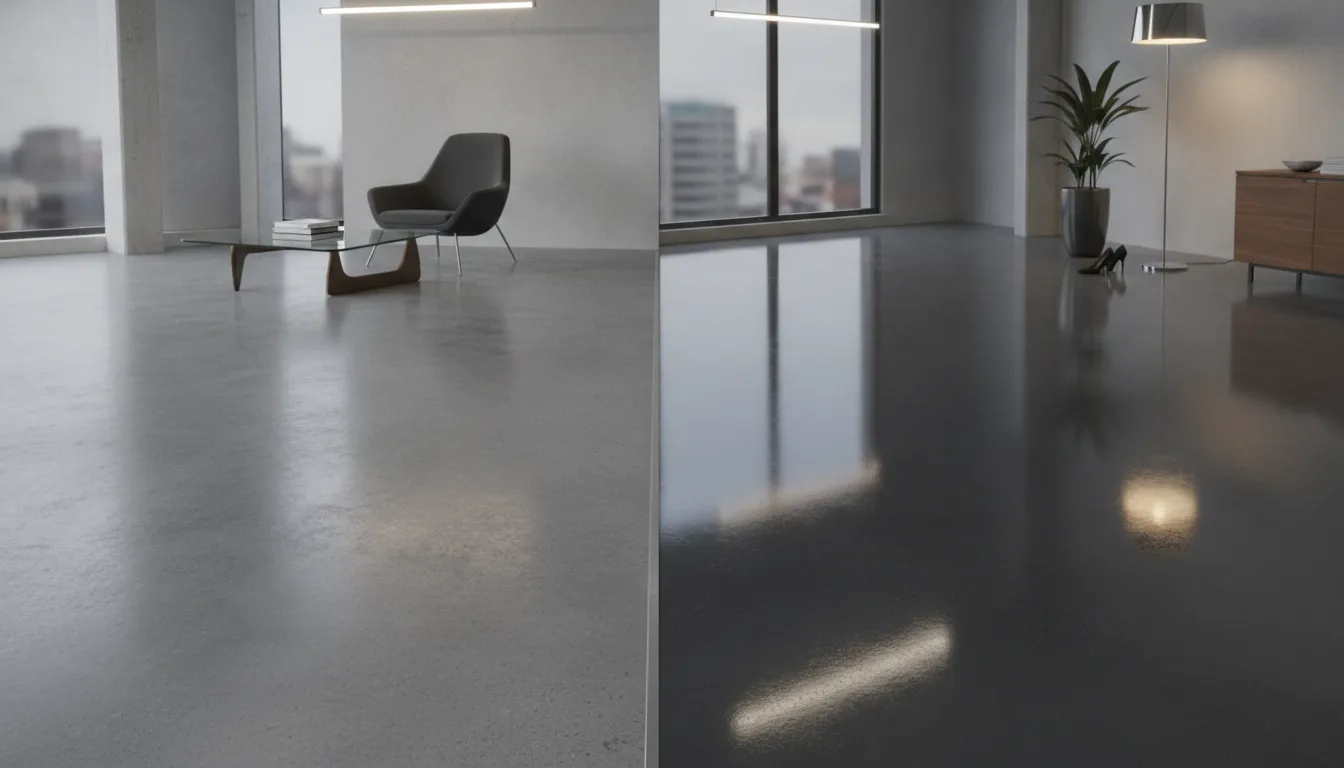
A warehouse floor has different demands from an office, retail store, or commercial kitchen. Forklifts, foot traffic, spills, moisture, and cleaning products all affect which concrete finish makes sense. If you’re weighing concrete grind and seal vs polished concrete, start by looking at how your facility operates each day. Grind-and-seal relies on a topical sealer that may need repair or recoating as it wears. Polished concrete gets its finish from the concrete itself, refined through successive grinding stages and treated with a densifier. Neither option suits every slab or use. Here’s what to compare before requesting a project estimate.
Key Takeaways
- Understand the finish before choosing: Grind-and-seal uses a protective topical sealer; polished concrete gets its sheen from grinding and densifying the slab.
- Match the floor to daily demands: Assess traffic, spills, moisture, traction, cleaning routines, and slab condition with a flooring contractor.
- Compare full project costs: Include preparation, ongoing care, repairs, future recoating or refinishing, and any downtime in your estimate.
How Do Grind-and-Seal and Polished Concrete Differ?
Grind-and-seal coats mechanically ground concrete with a topical sealer
For a grind-and-seal floor, a contractor mechanically grinds the concrete to remove surface imperfections and prepare the slab. After cleaning it, they apply a topical sealer that forms a protective layer on the surface. A stain or color treatment can be added before sealing to create a particular look.
The sealer plays a major role in the floor’s sheen and surface protection, so the product should suit the space. In a warehouse, for example, the choice may differ from what works in a retail showroom. Ask your contractor which sealer they recommend, how it responds to expected traffic and spills, and what maintenance it requires. Explore Alliance Epoxy Flooring’s flooring services to learn about options for commercial and industrial spaces.
Polished concrete uses finer grinding and a chemical densifier
Polished concrete gets its finish through progressively finer grinding and polishing with diamond abrasives. During the process, a chemical densifier is applied to harden the concrete surface. Unlike grind-and-seal, polished concrete gets its sheen from refining the concrete itself, not from a topical sealer. Polished concrete therefore has a different appearance and care profile from a sealed floor.
The final result depends partly on the slab’s condition, color, and aggregate, the small stones within the concrete. These natural differences can affect the floor’s appearance from one area to another. Before choosing this finish, ask to review examples and discuss what the existing slab is likely to reveal. See Alliance Epoxy Flooring’s concrete polishing service for more information.
Compare sheen, aggregate exposure, finish consistency, and surface protection
Both finishes can have a matte, satin, or glossy appearance, but they achieve their sheen differently. With grind-and-seal, the sealer creates the finish and can make the appearance more consistent across the floor. With polished concrete, the level of gloss comes from how finely the surface is ground and polished. The grinding process can also expose different amounts of aggregate, depending on the slab and the selected finish.
When comparing options, look at samples under lighting similar to your space. Ask how much variation to expect and what level of aggregate exposure is possible. Also clarify what protects the surface: a specific topical sealer for grind-and-seal, or the densified and polished concrete for polished floors. These details help you compare appearance and care needs, not just shine.
Neither finish is stain-proof or right for every project
A sealer can help protect concrete, but it does not make the floor immune to stains. How well it performs depends on the product, and some spills may mark the surface if they are not cleaned promptly. Polished concrete can also stain, even when it has a stain-guard treatment. Concrete flooring guidance explains why neither finish should be considered stain-proof.
Think about the materials handled in the space, how often spills happen, and how quickly staff can clean them. A warehouse, showroom, and commercial kitchen may call for different surface protection and maintenance routines. Before selecting a finish, discuss traffic, cleaning products, moisture, and appearance with your contractor. A site assessment can help determine which option suits the existing slab and the work the floor needs to handle.
How Do Contractors Install Each Finish?
Both grind-and-seal and polished concrete start with mechanical grinding, but the final steps differ. Contractors first assess the slab and how the space is used, then plan surface preparation, finish details, and access. A written scope should identify repairs, the intended appearance, dust-control measures, and when the floor can return to service.
Assess the slab, moisture, coatings, cracks, and repairs
Before recommending a finish, a contractor checks the concrete for cracks, divots, uneven areas, old coatings, adhesive, and other residue. The slab’s age, previous repairs, and known moisture history can also affect preparation and product selection. The contractor should ask how the floor will be used, including the type of foot or vehicle traffic, likely spills, cleaning methods, and any chemicals the surface may encounter. These details help define the finish and identify repair work before installation starts. A detailed slab assessment checklist can help property owners compare proposals and confirm they account for the same site conditions.
Prepare and grind the slab, then seal it for a grind-and-seal finish
For a grind-and-seal floor, the crew grinds the slab to remove contaminants and prepare the surface. They patch cracks and divots, then grind again where needed to create a more consistent base. After cleaning, the contractor may apply concrete stain for color before adding a compatible topical sealer. That sealer creates the visible finish and provides the surface protection, so its sheen and specifications should suit the space’s traffic and cleaning routine. The installation sequence can vary with the slab and chosen products. This grind-and-seal process overview outlines the typical steps from surface preparation to sealer application.
Grind in stages, apply densifier, and refine the surface for a polished finish
Polished concrete is refined through successive grinding and polishing stages, using progressively finer diamond abrasives. The contractor selects the sequence to achieve the specified sheen and level of aggregate exposure. A chemical densifier is applied during the process to harden the concrete surface, after which the crew continues refining the floor. Unlike grind-and-seal, polished concrete gets its shine from the mechanically finished surface rather than a topical sealer. The slab’s condition affects how consistent the final appearance can be, so the contractor should discuss repairs and finish expectations in advance. Learn more about Alliance Epoxy Flooring’s concrete polishing service.
Plan for dust control, access, curing, and downtime
Grinding produces concrete dust, so ask how the crew will collect it, protect nearby areas, and separate active work zones from employees, customers, or equipment. Plan access around deliveries and daily operations, too. For grind-and-seal, the sealer needs to cure before the floor returns to regular use. The required time depends on the product and site conditions. Polishing also involves multiple work stages, and repairs or a more detailed finish can affect the schedule. Request a written plan that lists work phases, restricted areas, and the expected return-to-service time. Available shutdown time can influence which option makes sense, as explained in this commercial flooring cost guide.
How Do the Finishes Wear and Perform?
Each finish responds differently to foot traffic, equipment, spills, and cleaning. The right choice depends on how your space operates and what kind of upkeep fits your team’s routine. Compare the protective layer, likely wear patterns, and traction needs before choosing a system.
Grind-and-seal: the topical sealer takes abrasion and may need recoating
A grind-and-seal floor has a coating over the mechanically ground concrete. That coating takes much of the abrasion from shoes, carts, and equipment. As it wears, its appearance and protective performance can change, so the floor may need repairs or recoating. How often depends on the sealer, traffic, cleaning methods, and exposure to spills.
This system can be a practical choice when you want a finished surface with a protective layer. The important step is selecting a sealer suited to the conditions and planning for its care. Grind-and-seal and polished concrete wear differently because one relies on a topical coating while the other refines the concrete itself, as Craftsman Concrete Floors explains.
Polished concrete: traffic can dull the sheen without wearing through a topical film
Polished concrete gets its finish from progressively finer grinding and a chemical densifier, rather than a topical film. Since there’s no coating to wear through, regular traffic can reduce the sheen over time without exposing a separate layer underneath. The surface can still show wear, especially in areas with heavy use or abrasive grit.
Routine dust removal and cleaning help preserve its appearance. The right level of polish depends on the space, too. A warehouse may call for a different sheen and maintenance routine than a retail floor or office. Review Alliance Epoxy Flooring’s concrete polishing services when considering this finish for your property.
Compare performance against spills, stains, chemicals, and moisture
Start with what reaches the floor in a typical workday. Warehouses may see tire marks, oil, and equipment traffic. Commercial kitchens may face food spills, grease, water, and frequent cleaning. A grind-and-seal system can suit spaces where spill protection matters, but its resistance depends on the sealer selected. Some products are formulated to help resist grease, oil, and stains, while others may not suit harsh chemicals.
Polished concrete can stain if spills remain on the surface, even when a stain guard has been applied. Moisture conditions also matter for both finishes. Before work begins, discuss the slab, expected spills, cleaning products, and moisture exposure with your contractor. Grind Kings Flooring’s comparison provides more detail on how these finishes may respond to spills and stains.
Set slip resistance for actual wet and dry conditions
Slip resistance depends on the finish, texture, contaminants, footwear, and cleaning routine. A smooth surface may suit a dry office or showroom, while a kitchen exposed to water or grease may need more texture. The product name alone won’t tell you how the floor will perform under your working conditions.
Tell your contractor where floors are likely to get wet, what cleaning products your staff use, and how spills are handled. Ask about samples and systems designed for the space, including slip-resistant coatings or colored quartz finishes. Alliance Epoxy Flooring’s commercial and industrial flooring services include options for demanding environments. Confirm that the selected system offers suitable traction while meeting your cleaning and appearance requirements.
Remember: polished concrete can stain, and grind-and-seal isn’t inherently inferior
Neither finish is automatically right for every property. Polished concrete can stain, and a stain guard does not make the slab immune to spills. Grind-and-seal can perform well when the sealer matches the conditions, the slab is properly prepared, and the coating receives care as needed.
Compare the specific systems under consideration rather than relying on the finish name alone. Ask which products will be used, how they respond to your facility’s traffic and cleaning routine, and what maintenance they require. A sample area can help you assess sheen, texture, and color before installation across a larger floor. A site assessment can also help identify slab concerns and match the finish to your operation.
How Do You Maintain Each Finish?
Both grind-and-seal and polished concrete need regular cleaning, but their maintenance routines differ. Grind-and-seal relies on a topical sealer that can wear down over time. Polished concrete gets its finish from the mechanically refined and densified concrete surface. Your care plan should account for traffic, spills, cleaning equipment, and how much downtime your facility can manage.
Remove dust and clean both surfaces with compatible products
Dust and grit can scratch a floor as people, carts, and equipment move across it. Sweep or dust-mop regularly, then damp-mop or use an auto-scrubber with a cleaner approved for the installed finish. Avoid acidic or harsh products unless your flooring contractor confirms they are suitable, since the wrong cleaner may affect a sealer or change the floor’s appearance.
Clean spills promptly, especially oils, food, and chemicals. Follow the cleanup guidance for the material involved, and avoid letting residue build up in busy areas. Neither finish is maintenance-free, so make routine cleaning part of your facility’s upkeep. Ask your installer which products and equipment are compatible with your flooring system.
Inspect grind-and-seal floors and recoat as needed
With grind-and-seal, the topical sealer takes much of the surface abrasion. Check busy aisles, entrances, loading zones, and areas around machinery for dull patches, scratches, peeling, or wear that exposes the concrete. Address damage early, and ask a flooring contractor whether the affected area needs a localized repair or a broader recoat.
Resealing frequency depends on traffic, cleaning practices, and the sealer used. In demanding conditions, some grind-and-seal floors may need resealing as often as once a year, but that is not a universal schedule. Use the floor’s condition and the product guidance to plan service. Repeated recoating can add labor and downtime, particularly across a large space, as Grind Kings Flooring notes.
Clean polished concrete routinely and care for the finish periodically
Polished concrete typically needs regular dust removal and damp cleaning, along with periodic care suited to the polishing system. Because the finish comes from refining and densifying the concrete rather than applying a conventional topical film, traffic can dull the sheen without wearing through a coating. Use products and procedures recommended for your floor, and ask a contractor to assess areas that stay dull after cleaning.
Proper care can help polished concrete serve for many years, but results depend on the slab, traffic, and maintenance routine. The concrete polishing process can also affect the finish and its care requirements, so confirm the recommended maintenance plan with your installer.
Compare repair needs, labor, and downtime over the floor’s service life
Look beyond daily cleaning when comparing the two finishes. Grind-and-seal may require periodic resealing, while polished concrete may need professional attention if its appearance becomes dull. Either surface can also need repairs if the slab cracks, takes impact damage, or encounters spills or conditions beyond its specifications.
Ask contractors which tasks your staff can handle, which require specialized equipment, and how much floor area may need to close during repairs or recoating. The right choice depends on the slab’s condition, expected traffic, contaminants, appearance goals, and schedule. A site assessment can help estimate maintenance labor and downtime for your facility. As Craftsman Concrete Floors explains, the best option depends on the project rather than a blanket claim that one finish is always easier or less expensive to maintain.
Which Finish Fits Your Project?
Match the surface to traffic, equipment, spills, and cleaning routines
Start with how the floor is used each day. A warehouse with forklifts, a retail space with steady foot traffic, and a commercial kitchen with frequent spills place different demands on concrete. Note the types of equipment, likely contaminants, cleaning products, and busiest traffic areas before choosing a finish.
Grind-and-seal may suit a space where a topical sealer can be monitored and refreshed as needed. Polished concrete may work well where the slab is suitable and the owner wants a refined surface without a topical film. Neither option is automatically best for every setting. The right choice depends on the slab, site conditions, appearance goals, and maintenance plan. A contractor’s project assessment can help match the finish to the demands of your operation.
Consider slab quality, repairs, moisture, and aggregate exposure
The condition of the existing slab can shape the result as much as the finish choice. Cracks, patching, uneven areas, and old coatings may need attention before installation. Ask what preparation and repairs are recommended, and how they could affect the schedule and final appearance.
Moisture is another important factor, especially when considering a sealed system. Sherwin-Williams notes that high concrete moisture levels can affect whether a sealed finish is appropriate. If you want exposed aggregate, discuss the amount of stone you hope to reveal. The result depends on the concrete’s composition and how deeply it is ground. Have the contractor inspect the slab and explain what the surface can realistically deliver.
Weigh appearance, maintenance needs, and expected service life
Grind-and-seal can create a defined sheen and protect the concrete with a topical coating. That coating takes the daily abrasion, so its condition should be checked and it may need recoating as the floor wears. Polished concrete develops its sheen through progressively finer grinding and does not rely on a topical film for its polished appearance. Traffic can dull the sheen, and the floor still needs regular cleaning and periodic care.
Consider which look suits your space, but also be honest about the time and labor available for upkeep. Compare installation requirements with ongoing care, repair needs, and the impact of maintenance on operations. This overview of polished concrete and grind-and-seal can help you prepare questions for a contractor. Your slab and site conditions should guide the final decision.
Consider slip-resistant or specialized coatings for demanding spaces
In wet or spill-prone areas, ask how the floor will perform under actual working conditions. A smooth surface may not provide the traction needed in a commercial kitchen, loading area, or entryway exposed to rain. The appropriate level of slip resistance depends on the liquids present, footwear, cleaning methods, and equipment used on site.
Some spaces may need a textured finish or a specialized coating, such as a food-safe system for a kitchen. Explain the hazards and cleaning routine to your contractor, then ask how the proposed finish balances traction, cleanability, and appearance. Alliance Epoxy Flooring offers epoxy flooring systems with options for demanding commercial and industrial environments. A site-specific recommendation can help ensure the flooring suits both daily operations and safety needs.
How Do Installation Costs and Long-Term Value Compare?
Compare grind-and-seal and polished concrete by looking beyond the installation price. The condition of the slab, the finish you choose, future maintenance, and the cost of downtime all affect the total investment. A lower upfront price may mean more frequent resealing, while a higher initial cost may suit a space where long service life and routine care are priorities.
When reviewing estimates, check that each contractor has priced the same scope of work. Ask what preparation, repairs, products, labor, maintenance, and schedule assumptions are included. This is especially important for busy facilities, where closing an area or moving equipment can add costs beyond the flooring work itself.
Use per-square-foot ranges for planning, not as fixed quotes
Polished concrete can cost between $3 and $12 per square foot, according to Concrete Network’s polished concrete cost guide. Use this range for early budgeting, not as a fixed quote. The final price depends on your location, slab condition, desired finish, project size, and site accessibility.
Grind-and-seal pricing also varies by project. Contractors may include different levels of grinding, repairs, sealers, and finish options, so a per-square-foot figure alone may not tell you what you are buying. Request a written scope that identifies the system, expected appearance, and included preparation. Then compare proposals based on matching specifications, rather than choosing a contractor by the lowest initial number.
Budget for slab preparation, repairs, specifications, materials, and labor
The condition of the concrete can have a significant effect on installation costs. Existing coatings or adhesives may need to be removed. Cracks, joints, or damaged areas may require repair, and moisture conditions can influence which products are suitable. The finish specification matters too, including sealer type and any slip-resistant additives.
Ask the contractor to describe the slab preparation, materials, and labor included in the estimate. Also confirm what may cost extra if discovered during the work. Commercial flooring cost guidance identifies repairs, coatings, specifications, square footage, and access as factors that can affect a project budget. For a commercial kitchen or other demanding space, explain the cleaning routine and wet conditions so the proposed system fits how the floor will be used.
Compare grind-and-seal’s potentially lower upfront cost with future recoating
Grind-and-seal can have a lower installation cost because the process generally involves fewer steps than polished concrete. Its topical sealer, however, receives the daily abrasion. Depending on foot and equipment traffic, cleaning practices, and the product used, the floor may need resealing to maintain its protection and appearance.
Ask how often recoating may be needed in your particular space and what the work involves. Will you need to move equipment or close part of the facility? How long will the area be unavailable? A grind-and-seal and polished concrete cost comparison explains the tradeoff between fewer installation steps and a potentially shorter interval before resealing. Use it as a planning reference, then ask your contractor to estimate upkeep based on your conditions.
Weigh polished concrete’s installation cost against routine care and possible refinishing
Polished concrete typically involves multiple grinding stages and a chemical densifier, so installation may require more work than grind-and-seal. It does not rely on a topical film for its polished finish. With proper care, it can last for decades, though heavy traffic may dull the sheen and the surface may eventually need refinishing.
Ask what routine cleaning and periodic care the contractor recommends, and whether refinishing could affect your operations. A comparison of polished concrete and grind-and-seal describes polished concrete as a durable option that generally needs little maintenance. Still, it is not maintenance-free. Compare its cleaning and potential refinishing needs with the expected resealing schedule for grind-and-seal to judge which option offers better value for your facility.
Include maintenance, repairs, and downtime in the project budget
Build a realistic budget around the floor’s service life, not installation alone. Include routine cleaning, repairs, future resealing or refinishing, and any business disruption. A finish with less frequent maintenance may suit a busy warehouse or retail space, even if its initial price is higher. A less expensive system may be practical if you can schedule future work without major disruption.
Ask contractors how soon each finish can handle foot traffic, equipment, and regular cleaning. For grind-and-seal, confirm how traffic and cleaning products may affect the sealer. In some conditions, resealing may be needed as often as once a year, so ask whether that schedule is realistic for your space. Include both the maintenance cost and the cost of temporarily closing or clearing the area when comparing estimates.
Request a site assessment for commercial or industrial flooring in New York, New Jersey, or Pennsylvania
A site assessment helps a contractor evaluate the slab, identify repairs, and discuss moisture, traffic, cleaning, and access. Request proposals based on the same project conditions. Ask each contractor to list the recommended system, products, preparation, maintenance approach, schedule assumptions, and acceptance criteria in writing. Clear, comparable proposals make it easier to weigh the full cost of each finish.
Alliance Epoxy Flooring provides commercial and industrial flooring services across New York, New Jersey, and Pennsylvania. Before an assessment, share how the space is used, what equipment or spills the floor must handle, and any limits on work hours or closures. These details help the contractor recommend a system suited to your operation and prepare a project-specific estimate.
Related Articles
- Sealed Concrete Floors vs. Polished Concrete Floors: What’s the Difference?
- Polished Concrete vs. Grind and Seal Concrete
- Plain vs. Polished vs. Sealed Concrete
- Cost Breakdown: Grind and Seal vs. Polished Concrete Flooring Options
- Concrete Flooring Cost Comparisons
Frequently Asked Questions
Is grind-and-seal or polished concrete better for a warehouse?\ Either may work, depending on the slab, vehicle traffic, spills, and maintenance plan. Grind-and-seal relies on a topical sealer that may need repair or recoating as it wears. Polished concrete has no topical film to wear through, though traffic can dull its sheen. Ask a contractor to assess your floor and recommend a system for your equipment and cleaning routine.
Can either finish prevent stains completely?\ No. A sealer or stain-guard treatment can help protect concrete, but spills may still leave marks, especially if they sit on the floor. The right protection depends on the products used and the materials handled in your space. Prompt cleanup and compatible cleaning products matter for both finishes.
How long does installation take, and when can we use the floor again?\ The schedule depends on the floor’s size and condition, required repairs, chosen finish, and site access. Grind-and-seal also needs time for the sealer to cure. Ask your contractor for a written work plan that lists restricted areas and expected return-to-service times for foot traffic, equipment, and cleaning.
Which finish usually costs less to install?\ Grind-and-seal may cost less upfront because it typically involves fewer finishing steps. Polished concrete requires multiple grinding stages and a densifier. However, the full cost depends on slab preparation, repairs, project requirements, future maintenance, and downtime. Compare written proposals with the same scope of work.
What should we ask a flooring contractor before choosing a finish?\ Ask how the slab’s condition, moisture, traffic, spills, and cleaning routine affect the recommendation. Confirm the products and preparation included, the expected appearance and traction, the maintenance plan, and the installation schedule. A site assessment can help determine whether grind-and-seal, polished concrete, or another flooring system fits your operation.