Concrete stain vs concrete paint: A Practical Guide
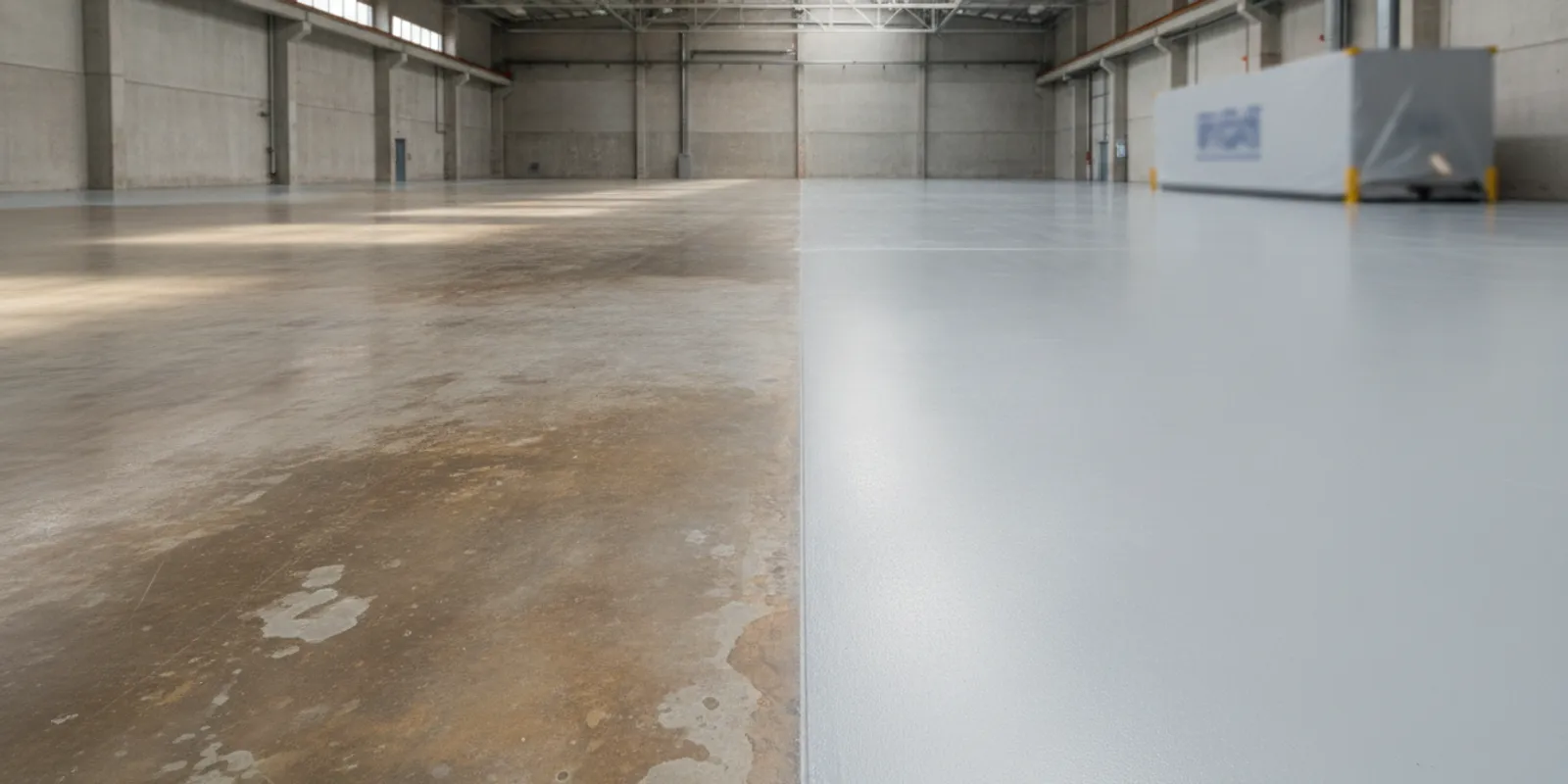
Choosing between concrete stain vs concrete paint starts with the slab and the way a space operates. A warehouse aisle, retail floor, back-of-house area, and office entry can have different traffic, cleaning, moisture, and appearance needs. A free assessment and project-specific estimate can help identify suitable options for the actual floor.
What is the difference between concrete stain and concrete paint?
Concrete stain colors the concrete through a stain-and-seal approach. Depending on the product and slab, the result can show variation in the concrete rather than forming a uniformly opaque layer. Concrete paint, by contrast, is generally a coating that sits on the surface and gives a more even, covered appearance. Products vary, so confirm the exact system and preparation requirements before comparing labels.
Neither option is automatically right for every facility. The condition and porosity of the slab, existing coatings, moisture, expected traffic, cleaning methods, and desired finish all matter. Stain can make natural variation part of the look, while paint can obscure more of the underlying concrete. Both require sound preparation and an appropriate protective finish for their intended use.
How does each finish look?
Staining tends to create color that follows the character of the concrete. Existing patches, differences in absorption, and slab age may affect the final appearance. A sample or test area can help set expectations, but it cannot erase the need to evaluate the actual floor and finish specifications.
Paint is often selected when a more consistent color or clearly defined visual area is wanted. A uniform look still depends on the substrate and preparation, and surface defects may remain visible or require repair. For a polished presentation in a customer-facing space, discuss sheen, color, lighting, and maintenance together rather than choosing by color alone.
Which option fits a commercial floor?
Consider the work performed in the space before selecting a finish. A warehouse may have concentrated traffic and equipment; a retail area may prioritize appearance and routine cleaning; a commercial kitchen may require a careful discussion of wash-down, moisture, traction, and applicable system documentation. Do not assume that a stain or paint product is suited to a particular exposure without reviewing its specifications.
- Traffic: Identify pedestrian routes, carts, equipment, and turning or loading areas.
- Substrate: Check for cracks, old coatings, repairs, surface contamination, and uneven absorption.
- Moisture: Discuss known dampness, wash-down, and moisture conditions before selecting a coating or sealer.
- Cleaning: Explain the cleaning agents, frequency, and methods used by the facility.
- Access and downtime: Plan work around operations and confirm product-specific cure and re-entry requirements.
- Appearance: Decide whether visible concrete character or a more uniform color is the priority.
For facilities comparing other concrete finishes, learn about concrete staining options and concrete grind-and-seal. These are distinct approaches; a project assessment can clarify whether either fits the slab and operating conditions.
How do preparation and upkeep differ?
Both approaches depend on preparation. The surface may need cleaning, mechanical preparation, repairs, or removal of incompatible existing material. The appropriate steps depend on the slab, prior treatments, product instructions, and project scope. Skipping or underestimating preparation can undermine the intended appearance and performance.
Care needs are also system-specific. Ask what routine cleaning is appropriate, whether the finish needs periodic maintenance, and what conditions may lead to touch-ups or renewed protection. Avoid assuming that a particular finish is maintenance-free. Keep the product name and care instructions with facility records so custodial and maintenance teams can follow the supplier's guidance.
What about cost and schedule?
There is no reliable universal price comparison based on the words “stain” and “paint” alone. Project cost can depend on floor area, slab condition, existing coatings, preparation, repairs, product selection, access, and any required protection or traction measures. Waterproofing, staining, and custom systems require a project-specific quote; the available general budgeting figures for other floor types should not be treated as a fixed price for this work.
Schedule depends on the condition of the floor, preparation, system, site access, and product cure requirements. Confirm when the space must be cleared, when work can begin, and when each area may be safely returned to its intended use. An estimate should account for operational constraints rather than promise a universal completion window.
Questions to ask before choosing
- What is the existing slab condition, and are there old coatings or contamination to address?
- What performance and finish does the selected product documentation support?
- How will moisture, traffic, cleaning, and any chemical exposure affect system selection?
- What preparation, repairs, and protective layers are included in the proposed scope?
- What are the project-specific access, cure, and re-entry requirements?
- How should the facility clean and maintain the finished floor?
For background on concrete coloring, review the concrete stain overview; it discusses stain choices, though it is not a substitute for product-specific technical guidance. For a facility project, request a free, no-obligation assessment and written estimate based on the site, intended use, and finish requirements.
Discuss your concrete floor project
The best comparison is the one grounded in the actual slab, operating conditions, and documented requirements, not a generic claim that one finish always outperforms the other.