Concrete Staining Cost: What Changes the Quote
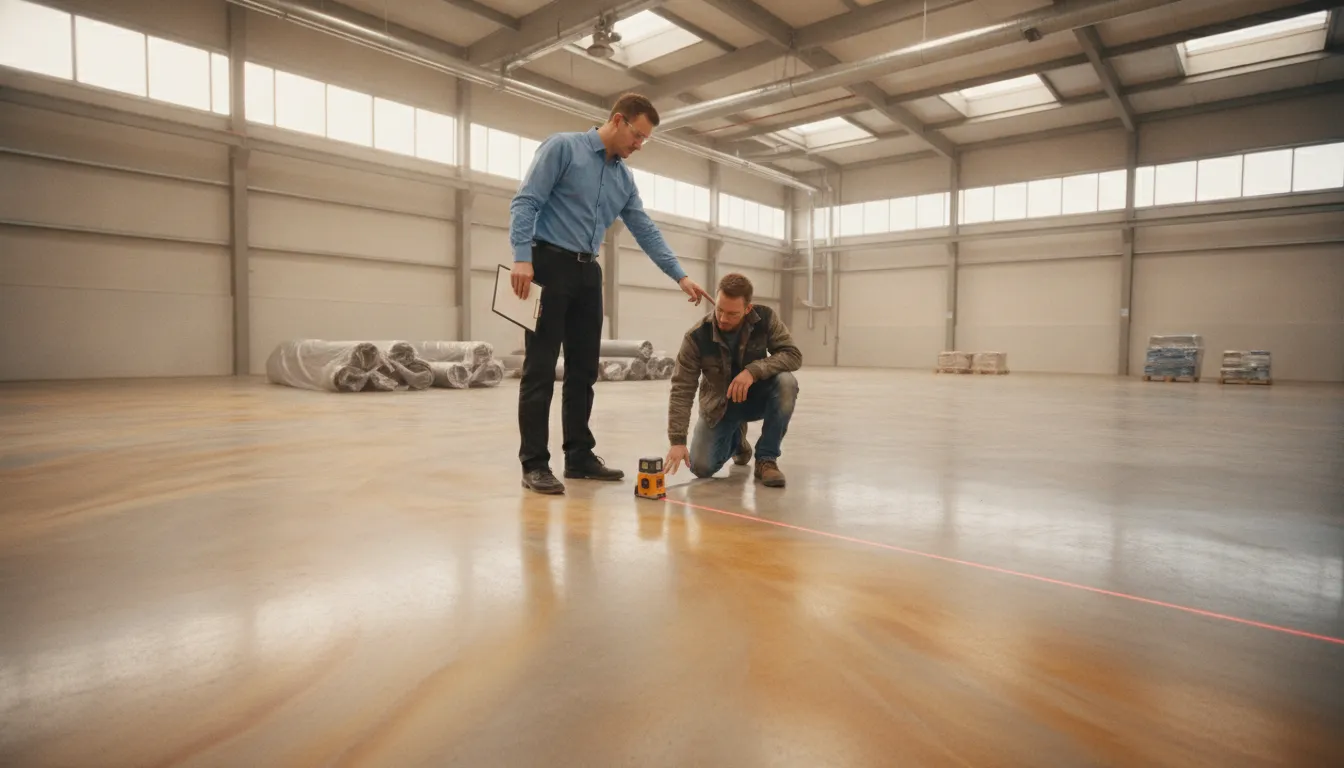
Budgeting a stained concrete floor starts with the slab, not a generic rate card. For a warehouse, showroom, office, or commercial facility, the final scope can change with surface condition, cleaning and repairs, color system, sealing, access, and the work window your operation can allow.
There is no single published concrete staining cost that applies to every project. An accurate price requires a free on-site assessment and written project-specific quote based on the existing concrete, preparation required, finish choice, and any added scope.
Staining can be a practical way to change the appearance of existing concrete, but the result depends on what is already underfoot. The next step is to examine the main cost variables so your team can compare scope clearly before approving work.
What Shapes Concrete Staining Cost?
There is no universal concrete staining cost for a commercial floor. Alliance does not publish a fixed staining rate because the budget depends on the existing slab, the preparation it needs, the selected finish, and the total project scope. Staining is applied to existing concrete, so the condition of that concrete matters before color or sealer enters the discussion.
For a facility manager or property owner, the main cost categories usually include:
- Area and layout: Total square footage matters, but so do rooms, joints, edges, columns, drains, and other details that affect setup and production.
- Site condition: Existing coatings, residue, uneven areas, cracks, repairs, and moisture concerns may require additional evaluation or preparation. Cleaning and necessary repairs should be addressed before staining and sealing.
- Preparation: Some slabs may need localized grinding, patching, removal work, or other surface preparation. These steps are not automatic inclusions; they depend on what the assessment finds.
- Finish and protection: Acid-reactive stains can create marbled earth tones, while water-based stains offer a wider, more uniform color palette. The desired appearance, number of applications, sealer, and any requested protective or traction treatment can change the scope.
- Access and operating conditions: Warehouse traffic, spills, cleaning routines, shutdown windows, restricted access, and work around active operations can affect planning and labor. Retail, office, and showroom projects may place more emphasis on color, sheen, presentation, and maintenance.
These variables are why a nearby project or a published figure for another flooring system should not be treated as a staining quote. Review the concrete staining options for existing concrete, then request a free project estimate for an on-site assessment and written scope. The quote should identify preparation, finish, sealing, access assumptions, exclusions, and any optional work rather than reducing the project to a single unqualified number.
Why Existing Concrete Changes the Estimate
Staining works with the concrete already in place, so the slab's condition becomes part of the project scope. A clean, reasonably sound surface may need less preparation than a floor with embedded dirt, paint, adhesive, old sealer, cracks, or patching. The estimate should separate the staining and sealing work from any preparation needed to make the surface suitable.
Cleaning, repairs, and old coatings
Cleaning is not a cosmetic step. It helps reveal oil, residue, repairs, and other conditions that can influence how the finished color appears. Cracks and damaged areas may need repair before staining, but staining should not be presented as a way to hide slab defects or create perfectly uniform color. If an old coating or sealer is present, removal may require additional evaluation and mechanical preparation. Grinding can be appropriate in some situations, but it is not automatic for every staining project. The right method depends on what is on the slab and the finish the owner wants.
Moisture and surface suitability
Moisture also belongs in the assessment, particularly for a commercial floor where premature finish problems could disrupt operations. An EPA HERO record identifies a study in which dry concrete produced higher in-situ bonding strength than wet concrete across four tested epoxy coatings. That is general evidence for evaluating moisture and bonding conditions, not a universal performance claim about every concrete stain or sealer: review the cited study record.
During an assessment, the contractor can review the slab, existing materials, cracks, cleaning needs, access, and any moisture concerns. Those findings help define whether cleaning alone is sufficient or whether repairs, coating removal, grinding, priming, sealing, or moisture-related work should be included as separate scope items. For a commercial property, documenting these conditions before approval is more useful than comparing a generic concrete staining cost figure that may not describe the actual floor.
How Finish and Color Choices Affect the Scope
Finish selection is not only a visual decision. It affects how the existing slab is evaluated, what preparation may be needed, and how the final protection is defined in the written scope. A commercial owner should review samples against the actual concrete rather than assume a catalog color will reproduce exactly on site.
Acid-reactive and water-based stain create different looks
Acid-reactive stain can create marbled, variegated earth tones because it reacts with characteristics in the concrete. That variation may be part of the desired appearance, but it also means the result is not a guarantee of uniform color. Water-based stain generally provides a wider color palette and may support a more consistent visual direction, although the slab still influences the finished appearance. The right choice depends on the facility's design goals, existing concrete, and tolerance for natural variation.
Color expectations should be part of the evaluation
Before approving a finish, discuss the desired level of variation, sheen, color depth, and acceptable surface character. Existing patches, repairs, porosity, contamination, and previous coatings can affect how stain is absorbed. Staining should not be presented as a way to conceal every defect. Cleaning and any necessary repairs may need to occur before the stain is applied, and those items should be identified rather than assumed.
Sealing and protection belong in the written scope as well. Confirm which sealer or protective finish is proposed, the appearance it is intended to provide, and whether added traction treatment or future maintenance considerations require separate review. A clear scope should distinguish the stain, preparation, sealing, and optional items so the project-specific estimate reflects the finish the facility actually wants.
For an overview of concrete staining options for existing concrete, review the service details before requesting an assessment.
How Facility Use and Access Affect the Project Budget
The same slab can require different staining scope depending on how the space operates. Facility use affects preparation, protection, finish planning, and the amount of coordination needed to complete the work without disrupting daily activity. These variables are why a project-specific assessment matters more than a generic square-foot figure.
Traffic, spills, and cleaning requirements
A warehouse or industrial floor should be evaluated for vehicle and foot traffic, pallet movement, abrasion, spills, existing coatings, and cleaning methods. Retail, office, and showroom spaces may place more emphasis on color, sheen, presentation, and routine maintenance. Commercial kitchens add wet cleaning, drains, chemicals, traction, and access concerns. Staining may be worth considering, but the selected system and protective steps must fit the actual service conditions. It should not be described as food-safe or as meeting a code requirement without system-specific documentation.
Concrete staining is applied to existing concrete, so cleaning and necessary repairs come before staining and sealing. If the slab has areas that need correction, or if the desired appearance requires additional preparation, those items can change the scope. Review concrete staining options for existing concrete alongside the condition of the floor rather than assuming the finish will conceal defects or create uniform color.
Access, shutdowns, and optional protection
Limited access, occupied areas, shelving, equipment, drains, and a narrow shutdown window can affect sequencing and labor. A facility manager should identify when rooms can be cleared, how materials and equipment will enter, and when the floor must return to service. Moisture evaluation may also be appropriate because slab moisture can influence flooring planning. A moisture barrier, anti-slip texture or topcoat, and cove base may be useful additions, but none should be treated as automatically included. Their need and pricing depend on the assessment and the selected scope.
For a defensible request for a free project estimate, provide the approximate area, facility use, access limits, cleaning demands, operating window, and known slab issues. The written quote can then separate required preparation from optional additions.
When Another Concrete Finish May Be a Better Fit
Concrete staining can be a practical choice when the existing slab is a good candidate and the priority is adding color and visual character without covering it with a resin coating. Acid-reactive stains can create marbled earth tones, while water-based stains offer a broader, more uniform color direction. The outcome still depends on the slab, prior coatings, repairs, moisture, and preparation. Review the available concrete staining options for existing concrete before assuming a particular appearance will transfer to your floor.
Other finishes may make more sense when the facility's operational requirements or appearance goals point elsewhere. The comparison below is a starting point, not a substitute for inspecting the concrete.
| Finish | How it treats the slab | When to investigate it |
|---|---|---|
| Stained concrete | Adds color to existing concrete, then is sealed after cleaning and any needed repairs. | Appearance, color variation, and the character of the existing slab are important. |
| Polished concrete | Refines and finishes the existing concrete surface rather than adding a resin coating. | The facility wants a refined slab appearance and the concrete can support the required preparation. |
| Grind-and-seal | Uses surface preparation and a sealer to preserve a more direct concrete look. | A lower-build sealed-concrete approach fits the appearance and use requirements. |
| Epoxy | Builds a resin coating system over prepared concrete. | A facility needs to compare coating-system options against traffic, spills, cleaning, traction, and downtime. |
Moisture evaluation, cleaning demands, traffic, access, and return-to-service timing can change the recommendation. For example, a warehouse may need to weigh pallet and vehicle traffic, while a wet-cleaned area may require review of drains, chemicals, traction, and other scope items. There is no universal answer to concrete staining cost or finish selection. A site assessment and written scope should establish which preparation, sealer, repairs, or other additions are actually needed.
How to Prepare for a Concrete Staining Estimate
- Document the floor area and how the space operates. Note approximate square footage, room-by-room dimensions, vehicle and foot traffic, spill exposure, cleaning methods, and any areas that must remain open. A warehouse, retail floor, office, or commercial kitchen may have different access and finish requirements.
- Describe the existing slab and old finishes. Share the slab's age if known, visible cracks or wear, moisture concerns, previous coatings, paint, adhesive, sealer, or other materials on the surface. Concrete staining is applied to existing concrete, so the current substrate affects both suitability and preparation.
- Identify cleaning and repair needs. Photograph stains, patching, spalls, joints, damage, and areas that may need grinding or other preparation. Cleaning and necessary repairs generally come before staining and sealing. Do not assume staining will conceal defects or create perfectly uniform color.
- Bring an appearance brief. Gather examples of the color, sheen, and overall character you want. Acid-reactive stains can create marbled earth tones, while water-based stains offer a wider, potentially more uniform color palette. The actual result depends on the concrete and should be evaluated on site.
- Explain access and downtime limits. Provide operating hours, delivery schedules, occupied areas, security requirements, and the dates or windows when sections can be closed. These details help the contractor plan sequencing and discuss re-entry conditions without promising a universal schedule.
- Separate core work from optional scope. Ask the estimate to identify included cleaning, preparation, staining, and sealing, then list assessment-dependent additions separately. Repairs, coating removal, moisture-related work, anti-slip texture, topcoats, and cove base may change the scope and should not be treated as automatic inclusions.
- Request an on-site assessment and written quote. A useful estimate should reflect the actual slab, selected finish, preparation, access, and project constraints. Because Alliance does not publish a universal concrete staining cost, request a free project-specific assessment and written quote rather than applying a rate from another flooring system.
Questions to Ask Before Approving the Scope
A clear scope should explain what happens before staining, how the finished floor will be protected, and what the facility must provide. Ask these questions before approving a concrete staining proposal.
What preparation and finish work is included?
- How will the existing slab be inspected, cleaned, and prepared?
- Are cracks, repairs, old coatings, or contamination included, or will they be quoted separately?
- Which stain type and color approach is proposed, and how will the team set expectations for natural variation?
- What sealer or protective topcoat is included, and is additional protection recommended for the planned traffic and cleaning routine?
Staining is applied to existing concrete, so the condition of that slab affects both suitability and scope. Ask whether a sample area or stain test is appropriate before approving the full finish. This can clarify the appearance on the actual concrete without promising perfectly uniform color.
What optional protection or facility work may be needed?
- Is anti-slip texture or another traction treatment needed for the facility's wet or high-traffic areas?
- Would a cove base, moisture-related work, or additional repairs be appropriate?
- Are these items included, listed as options, or excluded from the written quote?
Anti-slip treatment, cove base, and moisture-barrier work are assessment-dependent rather than automatic inclusions. The scope should identify each item and its purpose.
How will access, re-entry, and changes be handled?
- What areas must be cleared, and what access is required for preparation and application?
- When can staff, vehicles, equipment, and cleaning crews return to the space?
- How will concealed conditions or requested additions be documented and approved as change orders?
Have the contractor identify exclusions, site responsibilities, re-entry conditions, and the process for written changes. That detail makes the project-specific quote easier to compare and reduces surprises during installation.
Frequently Asked Questions
Is there a standard concrete staining cost per square foot?
There is no single standard rate that applies to every project. A project-specific estimate depends on the existing slab, required cleaning and repairs, stain selection, square footage, access, and the sealer or other finishing scope. Because Alliance Epoxy Flooring does not publish a fixed staining rate, a site assessment and written quote are the reliable way to budget the work.
What makes stained concrete more expensive?
Additional preparation can increase the project scope. Examples include repairs, difficult access, coating or residue removal, moisture-related work, multiple colors or patterns, and added traction treatment or topcoats. These items are subject to assessment and should be listed separately in the estimate rather than assumed to be included.
Is staining suitable for a warehouse or commercial kitchen?
It may be suitable when the existing concrete, appearance goals, traffic, cleaning requirements, moisture conditions, and access support the system. A warehouse or kitchen may also need a different finish or additional protection, depending on how the floor is used. Staining alone should not be treated as proof of food safety, code compliance, chemical resistance, or slip performance.
What should be included in a concrete staining estimate?
Ask for the measured area, concrete preparation, repairs, stain type and color approach, sealing or topcoat scope, optional traction treatment, cove base if applicable, access requirements, cleanup, and expected re-entry conditions. The estimate should also identify exclusions and site conditions that could change the final scope, so the written quote reflects the facility's actual needs.
Ready to plan your flooring project?
A site assessment can help connect the existing slab, preparation needs, finish choice, facility use, and expected return-to-service timing to a realistic scope. Request a free project estimate to discuss your commercial or industrial flooring project and receive a written, project-specific quote.