Epoxy Floor Coating Removal: What to Check First
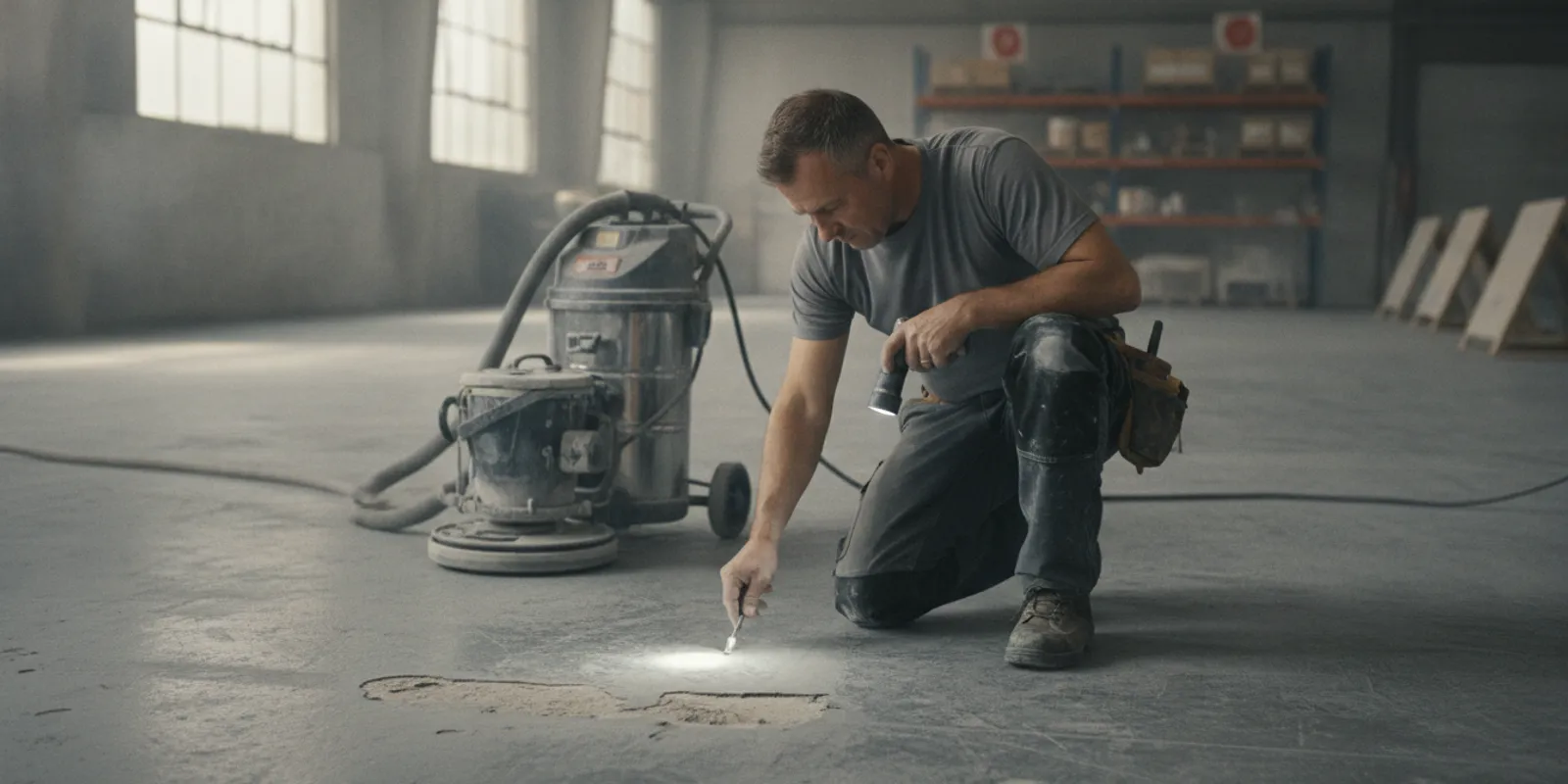
Epoxy floor coating removal is the work of taking an old epoxy layer off a concrete slab, or reducing it so a new finish can bond. A peeling warehouse aisle, a failed kitchen coating, or a color that no longer fits the space can all start the same conversation. The right scope is not automatic. It depends on how the coating is bonded, what the concrete looks like underneath, and what the floor has to do next.
Call (800) 518-9080 or request a free estimate.
What epoxy floor coating removal actually covers
Removal is a scope, not a single machine setting. A useful proposal says whether the crew will take the coating off the whole area, only the sections that have lost bond, or prepare the surface to a defined condition for the next system. Those are different jobs. A one-line note that says "remove epoxy" does not tell you which one you are buying.
Full removal means the existing film is taken off until the concrete is the working surface. Localized removal means only the loose, blistered, or contaminated sections come off, and sound coating may stay if the next system can go over it. Surface preparation is narrower still. The crew may grind or abrade the coating so a new layer can bond, without claiming the old film is gone.
None of those scopes includes concrete repair or a new floor by default. Once the film is off, cracks, old patches, oil, and moisture marks are easier to see. Agree before work starts how the crew will document those conditions and how extra work gets priced. Do not treat a removal line as a promise that the slab will be ready for forklifts the next morning.
Name the next use before you compare methods. A new commercial epoxy floor, a polished concrete surface, or a grind-and-seal finish each asks for a different surface. If the next system is still open, say so. The assessment can list which decision has to be made before the removal scope can be firm.
What to check before you pick a method
Start with the floor you have, not a catalog of tools. A walkthrough should mark the rooms, the failed areas, and the operations that cannot stop. Bring whatever history you actually have. Do not invent product names or install dates.
- Coating history. Note visible layers, any known age, and past patches or recoats. Share product sheets or maintenance notes if they exist.
- How it is failing. Mark peeling edges, bubbles, soft spots, exposed concrete, and color changes. A few loose patches are a different conversation than a coating that has separated across the aisle.
- The concrete. Point out cracks, patches, stains, and any area that stays damp. The slab under the film can hide damage a visual look will not catch.
- The next finish. Say whether you want a new coating, polished concrete, a sealed surface, or you have not decided. Ask what surface that system needs.
- How the building runs. List live work zones, dock routes, occupied rooms, and limits on noise, dust, odor, or hours.
Square footage alone will not produce a comparable price. Two bays of the same size can need different work if one has a thin, well-bonded film and the other has several layers over oil. If you do not know the history, say that. A contractor can explain which tests or sample areas would make the scope clearer.
Also separate the floor problem from a maintenance problem. Some coatings fail because of moisture in the slab or contamination that a new film will meet again. Removal does not fix the cause by itself. Ask what would have to change, in the slab or in how the area is used, before a replacement system is a fair recommendation.
Mechanical removal versus chemical removers
Mechanical abrasion and chemical coating removers are the two broad families a commercial project may consider. Neither is the default. Coating thickness, bond, concrete hardness, access, nearby operations, and the planned finish all change the answer. Ask for a site-specific reason, not a claim that one method is always faster or cleaner.
Mechanical removal
Grinding and related abrasion can reduce or remove a coating and leave a profile for the next finish. Open floor can take larger equipment than edges, columns, drains, and tight rooms. A scope that prices only the open area and stays silent on edges is incomplete. Those transitions are often where old coating is thickest and where the next floor will be judged.
Mechanical work makes dust and noise. Ask how the zone will be closed off, how dust will be collected, what nearby stock or machines need protection, and who handles cleanup. If part of the building stays open, set routes and boundaries before the date is locked. Do not read "dust control" as "no dust." Ask what the plan is for your rooms.
Concrete grinding can disturb the slab surface, so the method should match the concrete you have. Soft or already patched concrete may not tolerate the same tooling as a hard, sound slab. Ask how the crew will check the concrete as the coating comes off, and what happens if the film is thicker than the walkthrough suggested.
Chemical coating removers
A chemical remover can be considered for some coatings or for spots where machines cannot work well. The scope has to cover how the product is applied, how long it sits, how residue is removed, how the area is ventilated, and how used material is handled. Products are not interchangeable. Do not pick a chemical only because grinding sounds disruptive.
Ask which product approach is proposed, what the product instructions require, and how the concrete will be cleaned and checked afterward. Residue left on the slab can interfere with the next coating. Review the safety steps with the contractor and with your own safety lead. The written scope should name the controls for your site, not a generic safety paragraph.
Dust, access, and downtime
Removal changes more than the square feet under the machine. People, lifts, deliveries, and neighboring rooms still have to function. Before a date is set, mark the routes that must stay open and the stock, equipment, or tenants that cannot take dust or odor.
OSHA's construction rule for respirable crystalline silica, 29 CFR 1926.1153, includes walk-behind floor grinders on its Table 1. For that task, the rule calls for a machine with an integrated water feed to the cutting surface, or a dust-collection system the manufacturer recommends, plus the work practices listed for the task. That is a floor for worker protection on a listed task. It is not a promise that your project will be dust-free, and it does not replace a site plan.
Use a short operations list while the scope is still being written:
- Define the work area and the barriers or closed zones the crew expects.
- Name dust, debris, noise, ventilation, and cleanup for the actual rooms, not for a generic shop.
- Flag doors, docks, drains, joints, and transitions that need protection.
- List equipment and inventory that must move or be covered first.
- Ask whether the work can be phased, and what has to be true before a section is used again.
Do not accept a single "back in service" date as a guarantee. Timing depends on area, access, method, slab condition, and whether repairs or a new finish are in the same visit. Most commercial epoxy installation, when that is the next step, runs about one to three days plus further cure before heavy use.
Removal can add time before that clock starts. A thicker film or hidden concrete damage can change it. Ask for a written sequence that separates removal from later prep and from installation.
Also ask what the building must provide. Power, water, a place to stage equipment, and a path for waste all affect whether a method is practical. A chemical approach may need ventilation that a closed cooler cannot offer. A grinder may need a route that does not cross a clean packaging line. Those limits belong in the scope, not in a surprise on day one.
How removal scopes compare
Two estimates that both say "remove the epoxy" can describe different jobs. Compare them on the work, not on a single square-foot number. A lower figure may leave out edges, dust equipment, cleanup, or the next floor system.
| Scope item | What a clear proposal states | What to question |
|---|---|---|
| Area and material. | Rooms, square feet, and the coating believed to be there. | A price with no map of included rooms. |
| Goal. | Full removal, localized removal, or prep to a named condition. | Remove coating, with no end condition. |
| Edges and joints. | How columns, drains, patches, and transitions are handled. | Open floor only. Edges are excluded or not mentioned. |
| Dust and waste. | Collection, cleanup, and how debris leaves the site. | A dust mention with no method. |
| Hidden slab issues. | How new cracks, oil, or moisture get documented and priced. | No path for conditions found after the film is off. |
| Next floor. | Whether a new system is included or quoted separately. | A removal price that reads like a finished floor. |
Read allowances and exclusions in writing. If the condition under the coating cannot be confirmed until work begins, the proposal should say what is assumed and what would change the price. Ask how the prepared surface will be reviewed before the next stage starts. A walkthrough at that point is more useful than a debate after a new coating is already down.
If you are also weighing a new coating against polished or sealed concrete, keep that choice on its own page of the conversation. Removal gets the slab to a condition. It does not pick the finish. The epoxy versus polished concrete comparison covers that decision. This article stays on how the old film comes off.
What removal does not decide for you
A removal visit does not, by itself, prove the next floor will be chemical resistant, slip resistant, food safe, or accepted by an inspector. Those results depend on the system that goes down afterward, and on the product data for that system. Do not let a proposal turn marketing language into a guarantee.
Removal also does not publish a price you can take to accounting as an Alliance quote. There is no public rate for taking a coating off. Basic epoxy, flake, metallic, polished concrete, and grind-and-seal each have their own typical industry bands for new work, and those bands are not removal prices. Your number comes from a look at this slab and a written quote.
The same limit applies to speed. A fast-cure product or a start within a week is sometimes possible. It is not a standard offer. Moisture testing, extra layers, concrete repair, and limited access can all push the date. Ask which of those are already visible and which are still assumptions.
If the coating is sound and the real issue is wear, stains, or a refresh, removal may be the wrong first step. A maintenance plan or a recoating discussion can be the better scope. Say what is actually failing. Peeling and loss of bond point toward removal or repair. Dull color on a well-bonded film may not.
How to get ready for an assessment
Bring an approximate area and a simple note of which rooms are in play. Photograph peeling sections, bare concrete, edges, and transitions. If one room looks different from the next, label the photos. Share product sheets only when you have them, and mark guesses as guesses.
Add an operations note. List doors that must stay open, preferred work windows, safety rules, and delivery limits. If you have chosen the next finish, include it. If you have not, describe how the space is used and ask which choice has to be made before the work can be priced.
Alliance Epoxy Flooring installs commercial and industrial floor systems in New York, New Jersey, and Pennsylvania. The free estimate is a no-obligation look at the project, not a promise that a crew will be on site within 24 hours. A reply within 24 hours means someone responds. It does not mean the floor is quoted or installed in that window.
On the visit, ask the estimator to connect four things: the coating you can see, the concrete under it, how the building has to keep running, and the finish you want next. That is a better basis for a proposal than a removal label and a square-foot count.
If polished concrete is the likely next floor, read the concrete polishing service page for what that installation includes. If a sealed, lighter prep is more likely, the grind-and-seal service page describes that system. Neither page replaces a removal scope. They tell you what the slab may need after the old coating is addressed.
Call (800) 518-9080 or request a free estimate after you have photos and a room list.
Frequently asked questions
Does every old epoxy floor need full removal?
No. Full removal, localized removal, and surface preparation are different scopes. Bond, concrete condition, and the next system decide which one is worth pricing. A site look is what separates them.
Can a new coating go over the old one?
Sometimes, if the existing film is sound, compatible, and bonded. It should not be assumed over an unknown or failing surface. Ask for that judgment in the assessment, not as a blanket yes.
Will removal damage the concrete?
The method should fit the slab, but the concrete may already be cracked or patched under the film. Ask how the crew will limit damage and how newly visible problems will be documented before extra work proceeds.
How long will the area be out of service?
There is no single schedule. Area, access, method, slab condition, and any follow-on installation all move the date. Ask for a sequence and for the assumptions that would change it.
Is there a standard price per square foot?
No public removal rate is published. A per-square-foot figure is only useful if both proposals include the same rooms, edges, dust control, cleanup, and next step. The price you can use is the written quote after someone sees the floor.