How Long Does Epoxy Flooring Last? A Practical Guide
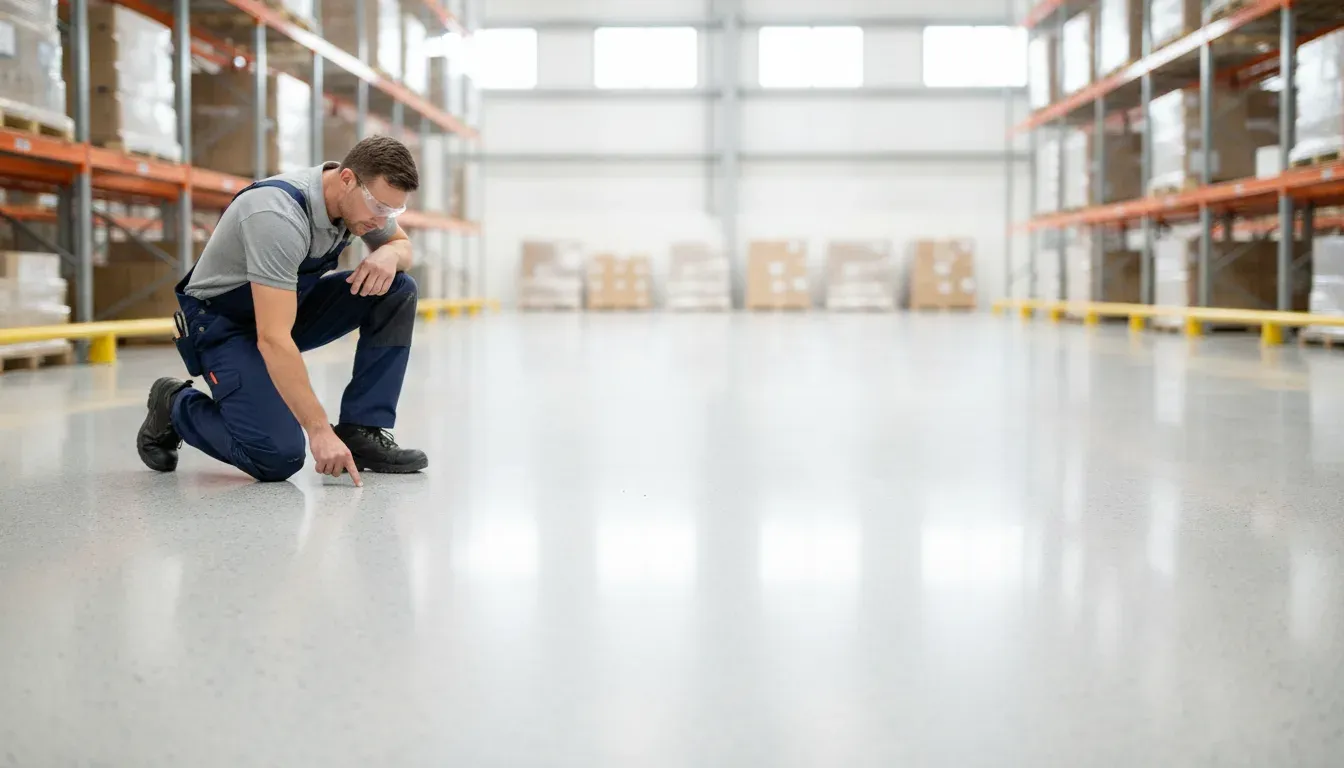
Epoxy flooring does not have one guaranteed lifespan. A properly specified and installed commercial floor can stay serviceable for years, but traffic, substrate moisture, chemicals, preparation, maintenance, and repair decisions determine when it needs attention.
Get a Free Estimate or call (800) 518-9080 to discuss your floor.
Why there is no single epoxy flooring lifespan
When someone asks how long epoxy flooring lasts, they may mean three different things:
- How long the coating looks new and consistent.
- How long it protects the concrete from the facility's normal traffic and spills.
- How long the entire floor system remains suitable before repair, recoating, or replacement is needed.
Those answers are not always the same. A floor can show scratches or dull areas while the underlying system still protects the slab. Another floor can look acceptable but have a moisture or adhesion problem that requires prompt investigation. The system build, concrete condition, work environment, and care plan all matter more than a generic number printed in an advertisement.
That is why a responsible flooring contractor should ask about the facility before estimating service life. A warehouse aisle with rolling loads, a commercial kitchen with frequent wash-downs, a retail showroom, and a garage do not place the same demands on an epoxy floor.
What determines how long epoxy flooring lasts?
The following factors have the largest effect on useful service life. They should be reviewed together rather than used as isolated promises.
1. Concrete preparation and adhesion
Preparation is the foundation of a coating project. Existing concrete may contain cracks, oil, old coatings, laitance, weak surface material, or other conditions that affect adhesion. A coating applied over a poorly prepared surface can fail even when the resin itself is suitable for the intended use.
Mechanical preparation, repairs, priming, and cleaning must match the substrate and selected system. A written scope should identify what happens to failed coatings, cracks, joints, stains, and weak concrete. Ask whether those items are included, excluded, or priced separately. Preparation is not a detail to trade away for a lower initial quote because it directly affects how the finished floor performs.
2. Moisture in or below the slab
Moisture can come from the ground, cleaning operations, plumbing, leaks, drainage conditions, or a change in the building environment. If moisture pressure or vapor movement is not understood before installation, a coating may blister, delaminate, or lose adhesion. The correct response depends on the source and the condition of the slab, not on the coating label alone.
For below-grade areas, wet rooms, and wash-down environments, ask how moisture conditions will be assessed and which preparation or moisture-control steps are part of the proposal. A coating should not be presented as a universal cure for active leaks or unresolved drainage problems.
3. Traffic, impact, and abrasion
Foot traffic, carts, pallet jacks, forklifts, dropped tools, vehicle tires, and moving equipment create different wear patterns. A floor in a pedestrian office area may experience less abrasion than a distribution aisle, while a maintenance shop may combine vehicle traffic with impacts and oil exposure.
Describe the actual traffic instead of saying only that the floor is heavy duty. Include peak routes, turning areas, loading zones, equipment weights, impact points, and expected operating hours. Those details help the contractor discuss whether the proposed coating, thickness, aggregate, and topcoat fit the use. They also help the facility plan where inspection and future touch-ups will matter most.
4. Chemicals, heat, water, and ultraviolet exposure
Epoxy performance depends on the specific substances and conditions involved. Cleaning chemicals, solvents, acids, oils, hot water, steam, standing moisture, and temperature changes can affect a coating differently. Sunlight can also influence some resin systems and finishes.
Provide a list of chemicals, concentrations, spill frequency, cleaning method, and temperature exposure during the estimate process. Do not rely on a broad claim that every epoxy system resists every chemical. The selected product data, assembly, exposure time, and cleanup practices should support any performance discussion.
5. System design and installation conditions
Epoxy is not one identical product. A project may use a solid-color coating, decorative flake, colored quartz, a textured finish, or another site-specific assembly. Coat count, film build, broadcast media, topcoat, cure conditions, and detailing at edges, drains, joints, and transitions can change the result.
Installation conditions matter as well. Temperature, humidity, ventilation, access, cure time, and protection from early traffic all need to be managed. A fast reopening request should be discussed with the contractor and tied to the selected system's instructions. Installation speed should not be treated as proof that the floor can accept normal traffic immediately.
Commercial epoxy floor life by operating environment
There is no universal ranking of which facility gets the longest-lasting epoxy floor. The useful comparison is the type of stress the floor must handle and how the project will control it.
| Operating environment | Primary wear pressure | Questions to resolve |
|---|---|---|
| Warehouse or distribution space | Rolling traffic, turning, abrasion, impacts, dust, and spills | Traffic routes, equipment, joints, repairs, coating removal, and return-to-service needs |
| Commercial kitchen or wet area | Wash-down, moisture, heat, cleaning chemicals, drains, and traction needs | Moisture source, cove base, drain details, cleaning chemistry, and system documentation |
| Retail, office, or showroom | Foot traffic, appearance, cleaning, and access restrictions | Finish expectations, visible wear areas, cleaning plan, and work-hour limitations |
| Garage or mechanical shop | Vehicle tires, oil, tools, impacts, and embedded contamination | Oil saturation, cracks, old coatings, hot-tire exposure, and repair scope |
Alliance Epoxy Flooring describes epoxy systems for commercial, industrial, kitchen, locker-room, warehouse, retail, and garage applications. The appropriate system still depends on the actual slab and operating conditions. Review the commercial epoxy flooring services page for the available application categories, then ask for a project-specific recommendation.
How to extend the useful life of an epoxy floor
Maintenance cannot correct a poor substrate or an unsuitable system, but it can reduce avoidable wear after a successful installation.
- Remove grit and debris regularly. Abrasive particles can create unnecessary wear when they are tracked through traffic lanes.
- Clean spills promptly. Fast response limits the time that a chemical or oil remains in contact with the surface.
- Use the approved cleaning method. Follow the selected system's product and maintenance instructions instead of assuming every cleaner is appropriate.
- Protect high-traffic routes. Walk-off practices, equipment protection, and sensible routing can reduce concentrated wear where the facility layout allows.
- Inspect recurring trouble spots. Doorways, turning areas, drains, joints, loading zones, and places with standing water deserve more attention than low-use areas.
- Document changes in use. New equipment, different chemicals, longer operating hours, or a process change may alter the floor's exposure.
Maintenance also supports workplace housekeeping. OSHA's general industry walking-working surfaces standard says workplaces should keep walking-working surfaces clean and orderly and inspect and maintain them in a safe condition. That rule does not certify a particular coating or make an epoxy floor OSHA-compliant. It is a reminder that floor upkeep remains part of facility operations. Read the OSHA walking-working surfaces standard for the applicable requirements.
Need help comparing a coating with another concrete finish? Review epoxy versus polished concrete, then call (800) 518-9080 to discuss the conditions in your facility.
Signs an epoxy floor may need repair or recoating
Wear does not automatically mean the entire floor must be removed. The first step is to identify what changed and whether the issue is cosmetic, localized, system-wide, or related to the slab.
- Dull or worn traffic lanes: repeated movement may change the appearance of concentrated routes before other areas.
- Scratches, chips, or impact damage: isolated damage may require a targeted repair, while widespread damage needs a broader assessment.
- Peeling or delamination: loss of adhesion can point to preparation, moisture, contamination, movement, or system compatibility concerns.
- Blisters or bubbles: these should be investigated rather than simply covered, especially where moisture or vapor may be involved.
- Exposed concrete or failed joints: openings can allow additional wear and make cleaning more difficult.
- Persistent water or chemical exposure: recurring exposure may require changes to drainage, process controls, detailing, or the selected system.
Take dated photos, note where the damage appears, and record what traffic or substance is present. A contractor can then evaluate whether cleaning, a small repair, a compatible recoat, removal, or a different system is appropriate. Avoid applying a new layer over an unknown failure without addressing the cause.
Repair, recoat, or replace: which path makes sense?
The right path depends on the condition of both the coating and the concrete below it.
Repair
A localized repair may be reasonable when the surrounding system remains well bonded and the damaged area is clearly defined. Color or texture matching may be visible, particularly on decorative finishes, so confirm the appearance expectation before work begins.
Recoat
A recoat may be considered when the existing surface is a suitable base, the cause of wear is understood, and the new material is compatible. Cleaning and mechanical preparation are still important. A recoat is not a shortcut around active moisture, widespread delamination, or a contaminated surface.
Replace or remove
Removal and replacement may be necessary when adhesion has failed broadly, the substrate is unsuitable, the exposure has changed, or the existing system cannot support the desired performance. The scope may include coating removal, concrete repair, moisture work, and a new system review.
For some spaces, another finish may better fit the facility's objectives. Alliance also offers concrete grind-and-seal and polished concrete options. The best comparison considers traffic, moisture, chemicals, appearance, cleanability, maintenance, access, and downtime rather than selecting by lifespan marketing alone.
Questions to ask before choosing an epoxy system
- What condition is the concrete in, and what preparation is required?
- How will moisture, cracks, joints, oil, and old coatings be evaluated?
- What traffic, equipment, chemicals, heat, water, and cleaning methods should the floor handle?
- Which system, coat build, aggregate, texture, and topcoat are being proposed, and why?
- What is included in the quoted scope, and which repairs or add-ons are separate?
- What cure and re-entry conditions apply to pedestrian, wheeled, and heavy use?
- How should the floor be cleaned, inspected, repaired, and maintained?
- What written warranty or product documentation applies to this specific assembly?
These questions produce a more useful service-life discussion than a generic promise. They also give a facility manager a record to share with operations, maintenance, purchasing, and building management.
How long does epoxy flooring last? FAQ
Can anyone guarantee that epoxy flooring will last a specific number of years?
A fixed guarantee is not responsible without knowing the substrate, assembly, use, exposure, installation conditions, and maintenance plan. Ask what assumptions support any projected service life and separate a performance estimate from a written warranty.
Does commercial epoxy flooring last longer than garage epoxy?
Not automatically. Commercial and garage floors can use different systems and face different exposures. A warehouse may have more abrasion and equipment traffic, while a garage may have oil, tires, impacts, and seasonal conditions. The system must match the use.
What shortens epoxy floor service life?
Common risks include inadequate preparation, unresolved moisture, unsuitable system selection, aggressive or incompatible exposure, impacts, concentrated traffic, early use before cure, and neglected maintenance. The specific cause should be investigated before selecting a repair.
Is recoating always better than replacing an epoxy floor?
No. Recoating may fit a sound, compatible surface with localized or predictable wear. Widespread delamination, active moisture, contamination, or a changed operating environment may require removal, substrate work, and a new system decision.
Ready to plan the right floor for your facility? Request a free, no-obligation assessment and written project-specific quote, or call (800) 518-9080 to speak with Alliance Epoxy Flooring.