How to clean a commercial kitchen floor: A Practical Guide
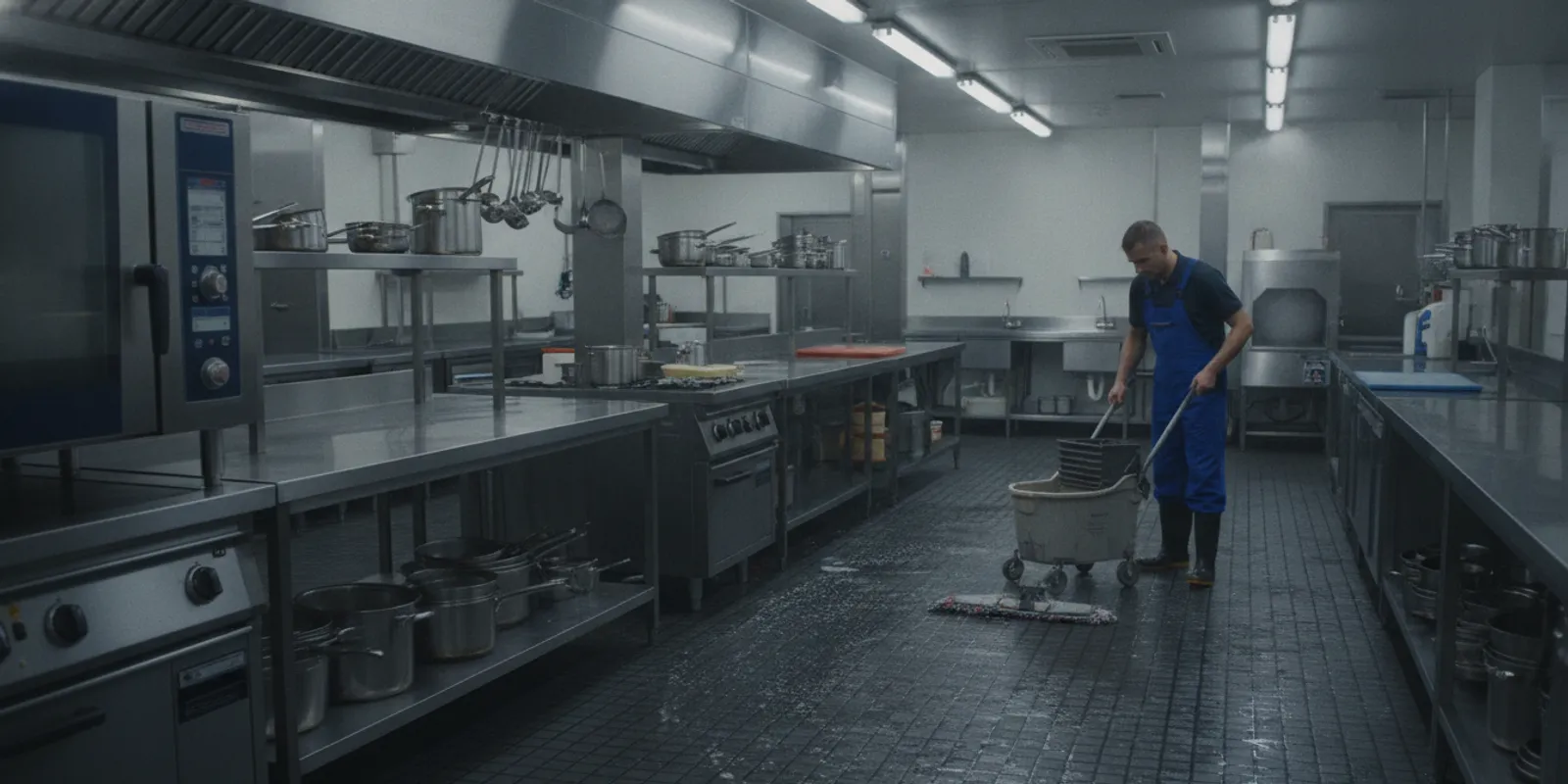
Knowing how to clean a commercial kitchen floor means more than mopping visible soil. A reliable routine removes debris and grease, manages cleaning solution, and keeps the area closed until it is dry and ready for use under facility procedures. For advice tied to your floor’s condition and planned use, Get a Free Estimate.
What should you do before washing the floor?
Start with the operating plan, not a bucket of water. Schedule the work during a suitable cleaning window, follow the facility’s food-safety procedures, and identify a route that lets staff keep away from the wet work area. Cleaning should not create an avoidable path through dirty water or leave a slippery surface where people need to pass.
- Set signs or barriers around the work zone and keep them in place until the floor is dry and the facility is ready to reopen it.
- Move portable equipment only when it is safe to do so. Protect electrical connections and follow site procedures around fixed equipment.
- Gather the facility-approved cleaner, measuring or dilution tools, mop or scrubber, squeegee or liquid-recovery equipment, and any protective equipment required by the product label.
- Inspect the floor and drains for standing grease, spills, damage, or blocked flow before adding water.
- Check the cleaner label and the flooring system’s care instructions for compatibility, dilution, contact time, and whether a rinse is needed.
Do not mix cleaning products or guess at a stronger concentration. More product does not necessarily mean a cleaner floor; excess solution can leave residue that requires additional recovery. If you are unsure whether a chemical or tool is suitable, confirm with the product manufacturer or flooring installer before using it across the room.
How do you clean a commercial kitchen floor step by step?
- Remove loose debris first. Sweep or collect food scraps and other solids before wet cleaning. This reduces the chance of spreading debris into drains, pushing it under equipment, or trapping it in a wet layer.
- Handle spills and grease according to the site plan. Use an approved procedure and a cleaner intended for the soil and compatible with the floor. Follow the product label for dilution and contact time rather than estimating either one.
- Apply solution in manageable sections. Work from the farthest point toward an exit so staff do not have to cross the area just cleaned. Use enough solution for the task, but do not flood the room or let product dry on the surface.
- Agitate where soil remains. Use a compatible brush, mop, or floor machine. Give edges, corners, equipment surrounds, and other soil-collecting areas careful attention. Avoid abrasive pads or tools unless the flooring system’s instructions allow them.
- Recover dirty liquid. Squeegee toward an appropriate drain only where facility procedures permit, or use suitable recovery equipment. Avoid pushing contaminated water into another work area or leaving it to dry on the floor.
- Rinse when required. Some products call for a clean-water rinse; others specify a different method. Follow the label and floor-care instructions. If rinsing is required, recover that water too rather than leaving a new wet film.
- Check the result before reopening. Remove remaining water and residue. Confirm the area is dry and safe to return to service under site procedures, then remove signs or barriers as appropriate.
For a busy kitchen, divide the room into sections that match the available closure window. For example, a facility might clean one side while the other remains outside the work zone, if its layout and procedures allow safe separation. The important point is to maintain a controlled route and avoid reopening an area simply because the surface looks clean.
Match the cleaning approach to the soil and floor
Grease, dry food scraps, light tracked-in dirt, and standing water are different conditions. Use this table as a planning aid, not as a substitute for the cleaner label, facility procedures, or the floor system’s care instructions.
| Condition | Practical response | Check before proceeding |
|---|---|---|
| Loose food and dry debris | Collect or sweep before wet cleaning. | Keep solids from spreading into drains or equipment areas. |
| Greasy soil | Follow an approved degreasing process and agitate as appropriate. | Confirm compatibility, dilution, contact time, and rinse or recovery steps. |
| Routine light soil | Use the facility’s regular cleaner and mop or scrubber process. | Check whether solution must be rinsed or recovered. |
| Standing water or repeat wetness | Remove the water and look for the source or a drainage issue. | Do not treat recurring moisture as a cleaning-only problem. |
| Residue after cleaning | Review the product amount and recovery or rinse method. | Do not add a second chemical without checking compatibility. |
How can you reduce residue and slip concerns?
Grease, excess detergent, cleaning residue, or rinse water can all leave a floor feeling slick. Measure product as directed, avoid over-applying it, and pick up dirty solution instead of repeatedly spreading it across the room. Rinse when instructions call for rinsing, and remove standing water before reopening the area.
Traction is affected by the floor system, surface texture, contamination, footwear, and conditions at the time. Do not describe any floor as slip-proof or assume a coating removes the need for housekeeping. If the floor feels different after cleaning, note the location, timing, product used, and steps taken. Then review the process and seek qualified evaluation if the concern persists rather than changing chemicals or abrasion methods at random.
OSHA’s walking-working surfaces rule requires employers to keep workplace walking-working surfaces clean and, to the extent feasible, dry; where wet processes are used, drainage and suitable means of keeping the area as dry as feasible are addressed. The rule is a useful reminder that cleaning includes water management, not just soil removal. See the OSHA walking-working surfaces standard and follow applicable requirements and site procedures.
What if grease, water, or damage keeps returning?
A recurring problem may point to more than an inconsistent mop routine. Look for patterns such as a drain that backs up, a leak, damaged joints, worn coating, or a location where cooking residue repeatedly collects. Record the area, time, soil type, products used, and result. A simple log can help facility teams distinguish a cleaning adjustment from maintenance or flooring work.
For example, if a patch becomes wet after each wash-down even when the cleaning method is unchanged, check whether water is pooling, flowing from equipment, or failing to reach the drain. If the same greasy patch returns near a cooking station, review where residue lands and whether the cleaning sequence reaches the edges around equipment. These observations help define the problem; they do not by themselves establish a cause or specify a repair.
How should cleaning needs inform flooring decisions?
Cleaning requirements belong in the flooring discussion before a project begins. A commercial kitchen’s use, slab condition, soil, wash-down practices, moisture, traffic, and available downtime all matter. Share practical details with a contractor so an assessment can consider the particular site rather than assume one finish fits every room.
- List the common soils, such as grease, food residue, oils, or wash-down water.
- Describe how often the area is cleaned and identify the chemicals, tools, and machines used.
- Point out where water collects, how it reaches a drain, and whether wetness returns after cleaning.
- Explain traffic routes and which zones need specific texture or access considerations.
- Describe when the room can be closed and any limits on moving equipment or restricting access.
These details can help compare preparation, cleanability, texture considerations, and expected disruption. Do not select a floor solely by a finish name or a general performance claim. A site assessment should account for the existing slab and use; the actual scope and written estimate depend on project requirements.
Alliance Epoxy Flooring installs site-assessed commercial and industrial flooring projects in New York, New Jersey, and Pennsylvania. Learn about commercial flooring options and flooring project services.
Frequently asked questions
How often should a commercial kitchen floor be cleaned?
Set the schedule according to facility food-safety procedures, operating conditions, and how quickly soil builds up. High-soil areas may need attention during service as well as a planned full cleaning routine.
Can I use the same degreaser on every floor?
No. Check the cleaner label and the flooring system’s care instructions for compatibility, dilution, and rinse requirements. Confirm with the manufacturer or installer before broad use if compatibility is uncertain.
Why does the floor feel slippery after mopping?
Grease, excess cleaner, detergent residue, or leftover water may contribute. Recheck dilution and liquid recovery, and keep the area closed until it is dry and safe under facility procedures.
Does a new floor remove the need for routine cleaning?
No. A commercial kitchen floor still needs a cleaning plan suited to its use and flooring system. Discuss routine products, equipment, soil, and wet conditions when assessing options.
A consistent process, compatible products, and attention to recurring moisture or damage help keep cleaning practical and the work area ready for use.