How to Clean Concrete Floors Without Damaging the Slab
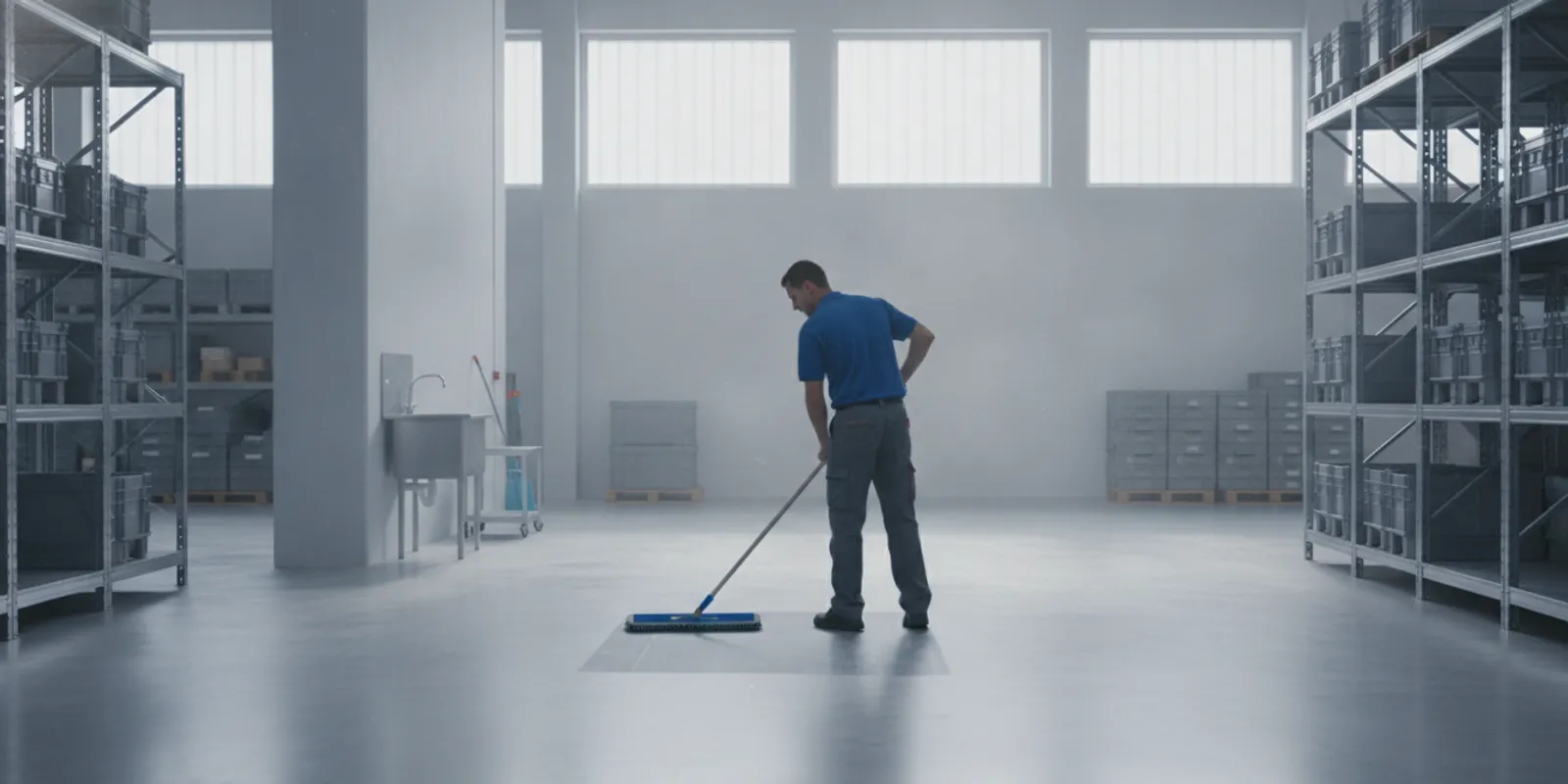
Knowing how to clean concrete floors starts with one question: what is on the surface? A bare slab, polished concrete, sealed concrete, and a coated floor can respond differently to water, cleaners, and scrubbing. For a commercial or industrial space, use a routine that removes soil without wearing the finish or creating an unsafe wet area.
What should you identify before cleaning?
Start by identifying the floor finish if you can. Check project records, product care instructions, or ask the installer. A clear-looking floor is not enough to tell whether it is bare concrete, polished, sealed, stained, or covered with an epoxy coating. If you do not know the system, begin with the least aggressive approach: remove loose debris, test a small area with a damp microfiber mop, and check the result after it dries.
Also consider how the room is used. A warehouse aisle with grit from foot or vehicle traffic needs frequent dry soil removal. A restaurant back-of-house area may have food or grease spills and a cleaning schedule set by facility procedures. A retail floor may need a method that does not leave a visible film. Match the cleaning plan to the actual soil and the finish, rather than treating every concrete floor the same.
- Confirm the finish: Ask whether the slab is unfinished, polished, sealed, stained, or coated.
- Check care directions: Use instructions for the installed system when available, especially before using a new chemical or machine.
- Look at the traffic: Note where grit, oil, food, or process residue tends to collect.
- Plan access: Keep people out of a wet cleaning area until it is dry and safe to use.
How do you remove everyday dust and grit?
For routine care, remove dry soil before adding water. Dust mop with a clean microfiber pad, or use a suitable vacuum to collect dust and grit. In a larger facility, a properly operated floor scrubber may be useful if it is appropriate for the finish and the manufacturer’s instructions allow it. Keep the pad or brush clean; a dirty tool can move grit around instead of removing it.
Work systematically in sections. Clear loose debris from corners and edges, then clean the main walking or work lanes. In a warehouse, pay attention to entrances, loading areas, and routes where outdoor grit gets tracked in. In a kitchen or service area, inspect around workstations and beneath movable equipment when access and safety procedures allow. Use signs or barriers if cleaning crosses an active route.
Dry soil removal matters because grit left under a mop or scrubber can act as an abrasive. If particles keep appearing in the same area, look for the source: an entry point, a damaged transition, or an operating process that sheds material. Improving the routine at that point may help more than increasing pressure or switching to a stronger cleaner.
What is a safe way to damp clean a concrete floor?
After dry debris is removed, damp mop with clean water or a cleaner approved for the floor finish. Use the dilution on the product label; more concentrate is not automatically better and can leave residue. Change the mop water or scrubber solution when it becomes visibly dirty. If the floor care instructions call for rinsing, follow them and remove leftover solution rather than allowing it to dry on the surface.
- Block off the area or arrange cleaning when traffic is low.
- Remove dust and loose particles first.
- Test the selected cleaner in an inconspicuous area and allow it to dry before judging the result.
- Apply the solution with a clean mop or appropriate machine, using only the amount needed.
- Rinse if directed by the care instructions, then remove excess water.
- Let the floor dry fully before reopening the area to normal traffic.
For a spill, follow the site’s response procedure and the product or process safety information. Pick up the material promptly using suitable protective equipment and absorbents for that substance. Do not mix cleaning products or use an unfamiliar chemical just because a stain is difficult. For workplace chemical-handling and safety resources, consult OSHA’s official site and your facility’s procedures.
Does the method change for polished, sealed, or coated concrete?
Yes. The visible surface and its care instructions should guide the method. Polished concrete is mechanically finished concrete; a coating or sealer is a separate surface layer. Concrete staining changes the appearance and may have a protective sealer as well. These are not interchangeable floor types, and one cleaning method should not be assumed to suit all of them.
| Surface type | Routine approach | What to check first |
|---|---|---|
| Unfinished concrete | Remove dry soil; use a controlled amount of water for damp cleaning. | Porosity, dusting, and whether water or residue is being absorbed. |
| Polished concrete | Dust mop regularly; use a cleaner and equipment permitted by the care guidance. | Recommended pad or brush, cleaner, and maintenance schedule. |
| Sealed or stained concrete | Use gentle damp cleaning and promptly remove excess solution. | Sealer care instructions and compatibility of any chemical. |
| Epoxy-coated concrete | Remove loose grit, then clean with an approved solution and suitable equipment. | Coating-specific cleaning directions, residue, and any textured areas. |
When the finish is unknown, avoid aggressive testing with strong chemicals, abrasive pads, or high-pressure equipment. A small test area is a useful first check, but it does not replace the care directions for a known system. If the floor is part of a facility with written sanitation or operating requirements, those procedures and the product documentation take precedence over general cleaning advice.
Alliance installs several distinct concrete-floor systems, including concrete polishing and commercial epoxy floor coatings. If you are comparing an existing finish or planning a replacement, review the concrete floor services available and ask about a system suited to the space.
Which cleaning mistakes should you avoid?
- Skipping dry cleanup: Mopping loose grit can drag particles across the surface. Sweep, dust mop, or vacuum first.
- Using an unapproved chemical: A cleaner that is too strong or incompatible may affect a finish or leave residue. Check the label and floor-care guidance.
- Leaving cleaner behind: Film can make a floor look dull or attract soil. Follow dilution instructions and rinse when required.
- Flooding the floor: Excess water can complicate access and drying, and may be unsuitable for some conditions. Use only what the method requires.
- Scrubbing every mark harder: A stubborn spot may be residue, surface wear, damage, or a chemical reaction. First identify what it is and test a suitable method.
- Reopening a wet area too soon: Control access until the cleaned area is dry and ready for normal use.
Do not try to fix persistent discoloration, peeling, pitting, cracks, or recurring moisture by repeatedly changing cleaners. Cleaning can remove surface soil, but it cannot restore a worn finish or resolve an underlying slab condition. Photograph the area, note when the issue appears, and share what cleaning products have been used. That information can help an assessment distinguish a cleaning problem from a floor or moisture concern.
How should a facility set a practical cleaning routine?
Set frequency according to traffic, soil, and the consequences of leaving a spill in place. A busy entrance may need dry cleanup more often than a low-traffic storage area. A production or food-service space may already have a documented cleaning schedule; coordinate floor care with that schedule rather than improvising a competing procedure.
A simple written plan can name the floor areas, daily or shift-based dry cleanup, damp-cleaning frequency, approved products, equipment, and the person responsible for checking the result. Include spill-response steps and a way to report recurring stains or surface changes. Review the plan when traffic patterns, equipment, or the floor finish changes.
Keep a record of the cleaner used and any unusual reaction or residue. If a floor looks different after a method is introduced, stop using that method until compatibility is checked. For facilities with more than one concrete finish, label cleaning equipment or instructions by area so staff do not accidentally apply a process intended for another surface.
When does a floor need assessment instead of more cleaning?
Consider an assessment if the floor repeatedly becomes dusty, a coating is lifting, the surface is pitted or cracked, moisture returns, or stains remain despite appropriate cleaning. These observations do not by themselves identify the cause. The next step may depend on the concrete, prior preparation, finish, traffic, moisture conditions, and the substance involved.
Before requesting help, gather a few useful details: the approximate area, how the space is used, the finish if known, cleaning products tried, where the problem occurs, and when it began. Photos can show the location and extent of a concern. For an installed-floor project, the assessment should focus on the existing slab and the intended use, not just the color or appearance you want.
Request a free, no-obligation floor estimate
Frequently asked questions
Can you use vinegar to clean concrete floors?
Do not assume vinegar is suitable. It is acidic, and the effect depends on the surface and its finish. Check the floor-care instructions and cleaner compatibility first; use an approved product instead of testing a household acid on an unknown surface.
How often should a commercial concrete floor be cleaned?
There is no single schedule for every facility. Set the frequency based on traffic, soil, spills, finish instructions, and any applicable site procedures. High-traffic routes may need more frequent dry cleanup than areas that see little use.
Can cleaning remove a stain or restore a damaged finish?
It may remove soil at the surface, but it cannot be counted on to correct a damaged or worn finish, pitting, or an underlying moisture issue. Identify the material and test a compatible cleaning method; seek an assessment if the condition persists or worsens.
A good concrete-floor routine is consistent, finish-aware, and matched to the way the facility operates. Start gently, follow the floor’s care guidance, and investigate recurring surface changes rather than relying on stronger scrubbing.