How to remove oil stains from concrete: A Practical Guide
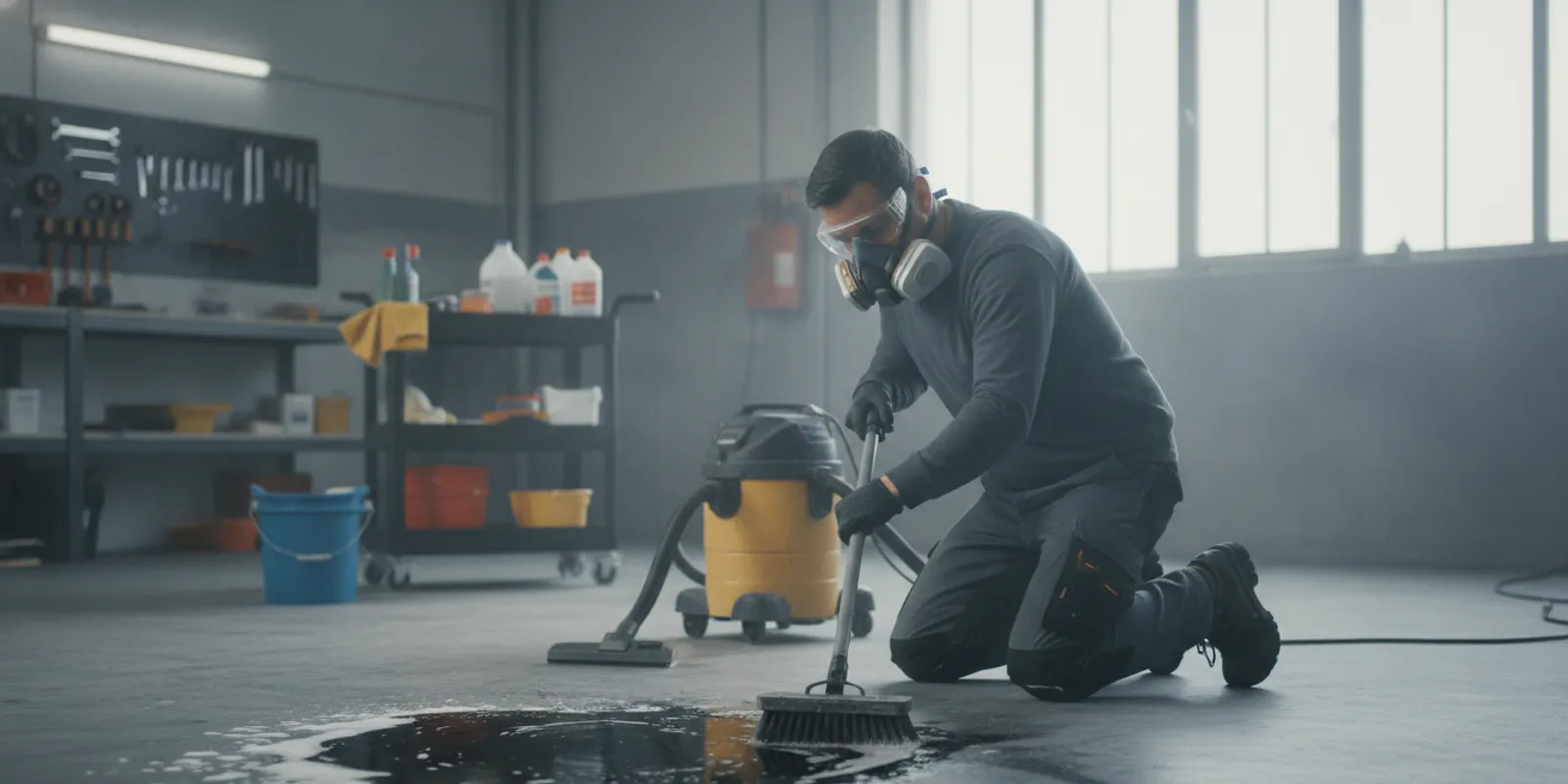
Learning how to remove oil stains from concrete starts with controlling the spill, identifying the floor surface, and choosing a cleaning method that will not create a larger maintenance problem. Fresh motor oil, hydraulic fluid, cooking oil, and grease may respond differently from an old, deeply absorbed mark. A garage spot also calls for a different plan than a warehouse, restaurant back-of-house area, or industrial facility. If the stain is widespread, recurring, or affecting a coating, Alliance Epoxy Flooring can provide a free, no-obligation assessment and written project-specific quote.
What should you check before cleaning an oil stain?
Start by documenting the area and restricting traffic. Before applying a degreaser or water, determine what is beneath the stain and what surrounds it. A cleaning method that is acceptable for bare concrete may dull a decorative finish, loosen a failing coating, or spread contaminated water toward a drain.
- Identify the surface: Check whether the floor is bare concrete, polished concrete, grind-and-seal, stained concrete, or an epoxy coating.
- Estimate the stain's age: Fresh oil is generally easier to absorb and lift than a dark mark that has remained in the pores for months.
- Look for substrate problems: Cracks, spalling, weak concrete, moisture, or previous coating failure may need attention before cleaning or refinishing.
- Review facility rules: Confirm requirements for ventilation, protective equipment, chemical storage, drainage, wastewater, and re-entry.
- Protect nearby assets: Move or cover equipment, inventory, walls, door thresholds, and pedestrian routes that could be affected.
For a commercial floor, keep a record of the product used, dilution, dwell time, area treated, and disposal method. This makes it easier to repeat a successful process and helps a flooring contractor understand what may have affected the slab or coating.
How do you remove a fresh oil stain from bare concrete?
Fresh spills are the best opportunity to limit penetration. First, stop the source if it is safe to do so and keep vehicles, forklifts, and pedestrians away from the area. Apply an approved commercial absorbent, mineral-based absorbent, or another facility-approved material. Give it time to collect the liquid according to its product directions, then sweep it up and dispose of it under the site's waste-handling procedures.
After the bulk liquid is removed, use a concrete-safe degreaser selected for the surface. Follow the label for dilution, dwell time, ventilation, and protective equipment. Work in a manageable area rather than flooding the whole floor. Agitate with a stiff nylon brush or the tool recommended for the product. A wire brush can scratch or alter some surfaces.
Collect loosened residue instead of pushing it toward a floor drain. Rinse only when the facility has a compliant way to manage the wastewater, and remove standing water promptly. If the area must return to service, verify that it is clean, dry, and safe for the expected foot or vehicle traffic before reopening it.
The Southern West Virginia University guide to removing old oil stains from concrete also discusses practical approaches for treating oil that has remained on a concrete surface. Test any cleaning method in a small, inconspicuous area first, especially when the floor has a finish.
What works on an old oil stain?
Old stains usually need patience rather than one aggressive treatment. Remove loose dirt, choose a cleaner or poultice-style product labeled for the floor, and follow its dwell and removal instructions. Several controlled applications may reduce the mark with less risk than one harsh chemical treatment or a high-pressure pass.
If the stain remains after the residue has been reduced, the issue may be discoloration within porous concrete rather than oil sitting only at the surface. Cleaning can improve the appearance without restoring the slab to an unstained condition. Photograph the test area and compare it after it dries, because wet concrete can make results difficult to judge.
Grinding may remove a shallow layer of concrete or an existing coating, but it changes the surface profile and creates dust and cleanup requirements. It should be considered as part of a complete preparation plan, not used automatically on every spot. Coating removal, repairs, moisture barriers, and other additions are subject to assessment and separate pricing.
When can pressure washing help?
Pressure washing may help with surface residue, but it is not a universal answer for embedded oil. Excessive pressure can damage weak concrete, disturb a coating, drive contamination into the slab, or create wastewater that cannot be discharged without proper handling. It can also leave the floor wet when the facility needs a quick inspection or return to service.
If pressure washing is considered, plan containment before starting. Protect adjacent rooms, stored goods, equipment, walls, and drains. Keep people away from wet or chemically treated surfaces. Use the lowest effective pressure and a method compatible with the floor. On a coated floor, follow the coating's maintenance guidance rather than assuming that a concrete-cleaning method is safe.
How should a facility handle recurring oil stains?
A stain that returns often indicates an operating or maintenance issue. Review where vehicles, equipment, drums, cooking appliances, or repair work create spills. Inspect for leaks, improve prompt absorption, and train the people responsible for cleanup. A written spill process can identify who isolates the area, who collects the absorbent, and how the waste is handled.
Recurring staining is also a reason to review the floor system. Bare concrete can be porous and difficult to maintain. Depending on the slab and use, a facility may evaluate epoxy coatings, polished concrete, floor waterproofing, concrete staining, or concrete grind-and-seal. The right choice depends on traffic, moisture, chemicals, cleaning practices, traction, appearance, access, and downtime rather than on the stain alone.
Alliance Epoxy Flooring's flooring services can be reviewed alongside the facility's operating requirements. Decorative flake and colored quartz are epoxy options, while polished concrete and grind-and-seal involve different preparation and finish considerations. A service description does not replace a site assessment, particularly where oil contamination or moisture may affect preparation.
What should commercial buyers include in an assessment?
Give the flooring contractor enough information to evaluate the problem efficiently. Useful details include the approximate square footage, stain locations, likely source, age of the contamination, current floor system, cleaning products already used, drainage limitations, operating hours, equipment traffic, and the desired return-to-service window.
Ask how the proposed plan addresses preparation, residue collection, repairs, coating removal, moisture, traction, access, and re-entry. Do not assume that anti-slip treatment, cove base, moisture barriers, repairs, or other scope additions are automatically included. The written quote should identify the selected finish and any conditions that could change the work.
Published industry budgeting guidance is illustrative rather than Alliance pricing. Basic epoxy is often discussed at $3–$6 per square foot, decorative flake at $5–$10, polished concrete at $4–$9, and grind-and-seal at $2–$5. Waterproofing, staining, colored quartz, and custom kitchen systems require a project-specific quote. Access difficulty, preparation, contamination, repairs, and specifications can change the final scope.
When should you call a flooring contractor?
Request an assessment when the stain covers a large operating area, returns after cleaning, sits near drains or equipment, affects an existing coating, or appears with cracking, spalling, moisture, or a strong odor. Professional input is also useful when cleaning could interrupt production or when a new finish will depend on dependable surface preparation.
Alliance Epoxy Flooring is positioned as a commercial and industrial flooring installation contractor serving advertised markets in New York, New Jersey, and Pennsylvania. Residential garages and smaller commercial projects are also in scope but are secondary to that commercial and industrial focus. Availability and project fit should be confirmed for the specific property. The company's estimate process is intended for a free, no-obligation assessment and written project-specific quote; an advertised reply window is a response promise, not a guarantee of inspection, installation, or completed pricing within a particular period.
Frequently asked questions
Can baking soda remove oil from concrete?
An absorbent household material may help with a small fresh spill, but results depend on the oil, surface, and timing. Commercial facilities should use an approved absorbent and follow their disposal procedures rather than relying on a home remedy.
Will bleach remove an oil stain?
Bleach is not a general-purpose solution for embedded oil and may create unnecessary chemical or surface risks. Select a product labeled for the floor type, follow its instructions, and test it in a small area first.
Can an oil stain be removed from epoxy flooring?
Surface residue can often be addressed with a cleaner compatible with the coating, but harsh abrasion or chemicals may dull or damage the finish. Identify the coating and follow its maintenance guidance before scrubbing or pressure washing.
Does cleaning remove every old oil mark?
Not always. Deeply absorbed oil can leave discoloration after the residue is reduced. The next step may involve additional preparation or a new finish, subject to an assessment of the concrete and intended use.
The safest way to restore an oil-stained commercial floor is to match the cleaning and preparation plan to the concrete, the facility, and the finish that needs to follow.