Polished Concrete vs Epoxy Flooring for Commercial Spaces
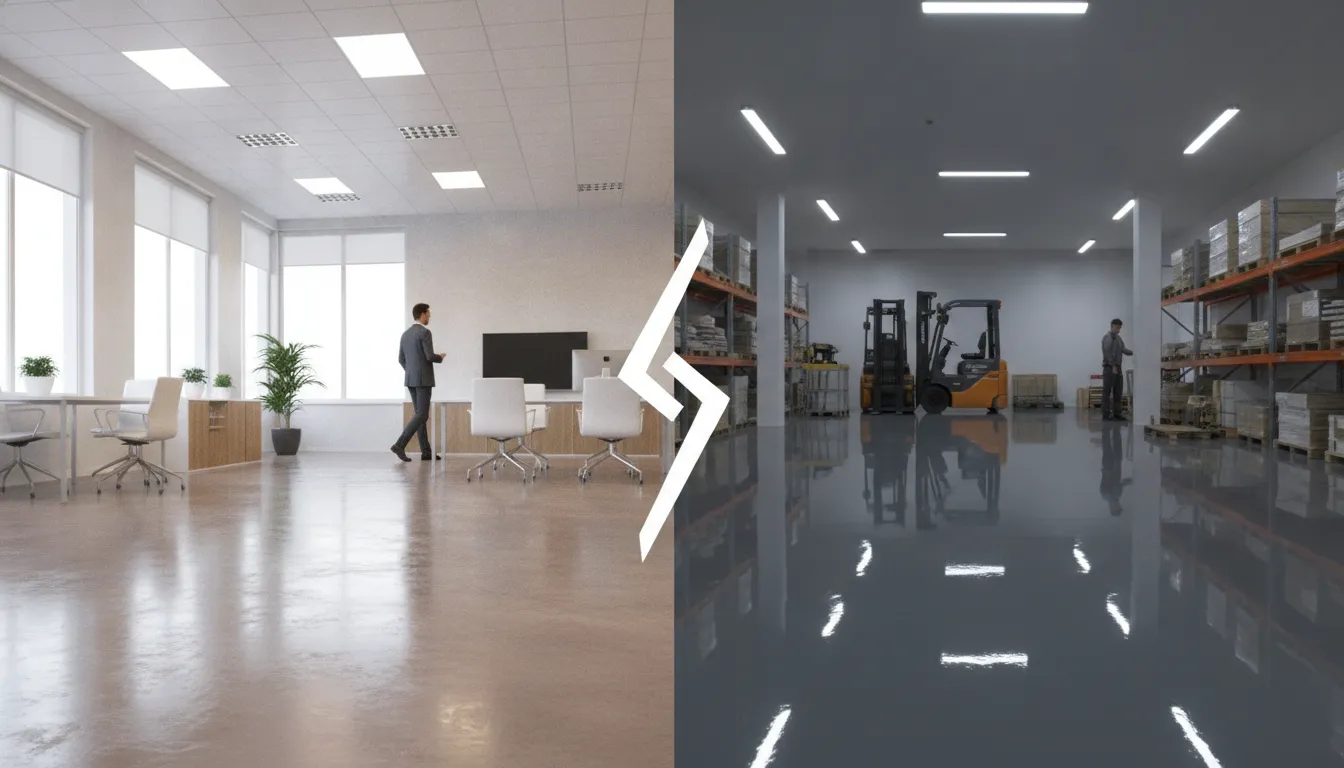
Your floor affects how your business looks, how your team works, and how much time you spend on cleaning and repairs. Polished concrete and epoxy are both popular choices for commercial spaces, but they’re made differently and don’t respond to every condition in the same way. A polished finish refines the concrete slab itself. An epoxy system adds a coating over prepared concrete. Understanding that difference is a useful first step when comparing polished concrete vs epoxy flooring for commercial spaces. We’ll cover traffic, spills, moisture, traction, maintenance, and installation so you can assess which option fits your facility’s needs.
Key Takeaways
- Match the floor to daily demands: Consider traffic, spills, moisture, cleaning, and traction when comparing polished concrete with epoxy.
- Have the slab assessed before choosing a system: Testing and inspection can identify moisture, cracks, contamination, and repairs that affect installation and cost.
- Plan for maintenance and downtime: Ask about routine care, future repairs, installation timing, and how work can be phased around your operations.
Polished Concrete vs. Epoxy Flooring
Polished concrete and epoxy flooring can both work well in commercial spaces, but they’re made in different ways. Polished concrete is the existing slab, ground and refined to create a smooth finish. Epoxy is a coating applied over prepared concrete. That distinction affects the floor’s appearance, how it handles spills, and what repairs may involve.
The right choice depends on the slab and the work happening on it. A warehouse with forklift traffic has different needs from an office, retail store, or commercial kitchen. Polished concrete can suit facilities that want a natural, low-profile finish. Epoxy offers more options for color and texture, and can help shield concrete from common spills. Both systems depend on proper assessment and preparation before installation.
Consider traffic, moisture, chemical exposure, traction needs, and the time your business can set aside for installation. A site assessment can help determine whether the slab is suitable for polishing or needs a coating system. Review Alliance Epoxy Flooring’s commercial flooring services to see which options may fit your facility.
Polish concrete by grinding and refining the slab
Polished concrete is made by grinding the existing slab with progressively finer abrasives. This process smooths the surface and creates the selected sheen, from matte to glossy. Depending on the slab and how much material is ground away, the finish may show little or more of the stone aggregate within the concrete.
Because polishing refines the slab rather than adding a coating, the finished floor keeps the concrete’s natural character. Its appearance can also reveal existing patches, cracks, or color variation, so the slab’s condition matters. Polished concrete generally needs straightforward routine care, but it isn’t maintenance-free. The right cleaner and care schedule depend on how the space is used. Learn more about concrete polishing for commercial interiors.
Apply epoxy resin over prepared concrete
Epoxy flooring is a coating system installed over concrete that has been prepared to help the material bond. Preparation may include grinding, repairs, and addressing surface contamination or moisture concerns. Depending on the system, an installer may apply a primer, one or more epoxy layers, decorative materials, and a protective topcoat.
The coating creates a continuous surface over the slab and allows for a wide range of colors and finishes. It can also help protect concrete from substances such as oil and chemicals, when the system is selected for the specific exposure. Good results depend on matching the coating to the slab and the facility’s conditions. Explore epoxy flooring systems to learn about available applications and finishes.
Compare feel, finish, and daily performance
Polished concrete has no coating film, so it won’t peel or lift in the way a coating can. Its finish can range from matte to high gloss, and the amount of visible aggregate depends on the grinding process. The natural look may suit a facility that wants to keep the slab visible, though it can also make existing repairs or variations more noticeable.
Epoxy adds a finished layer that can create a more consistent appearance and help keep oil, brake fluid, and road salt off the concrete. The surface may feel different underfoot, depending on the system and texture. Performance for either option depends on installation, traffic, and ongoing care. Read this overview of epoxy and polished concrete for more on how the systems differ.
Compare epoxy, flake, and colored quartz systems
Epoxy can be installed in several styles. Solid-color systems create a uniform look, while decorative flake adds color and visual texture. Colored quartz systems combine resin with colored aggregate to create a textured finish that can be specified for areas where traction is important. Each system should be selected based on the space’s cleaning needs, traffic, and exposure.
Decorative finishes can also help define work areas, walkways, or safety zones. When comparing options, consider how the floor will look under your lighting, whether the texture suits the tasks performed there, and how the surface will be cleaned. Flake and quartz finishes are not interchangeable, and the texture alone does not guarantee slip resistance. Ask your contractor to specify a system for the actual conditions in your facility. For examples of decorative epoxy choices, see this overview of color, flake, and metallic finishes.
How Much Do Commercial Floors Cost?
Commercial flooring costs depend on more than the finish. Slab condition, moisture, repairs, maintenance, and installation downtime all affect the total investment. Use price-per-square-foot ranges as a starting point, then request a site-specific estimate that accounts for your facility’s needs.
Compare installation and preparation costs
As a planning range, polished concrete may cost about $3 to $12 per square foot for basic work. Decorative finishes can range from $5 to $15 or more per square foot. Epoxy installation commonly costs about $4 to $12 per square foot. Actual pricing varies by location, project size, finish, and the amount of preparation required. A sound, clean slab may need less work than one with cracks, old coatings, or surface damage.
Ask contractors to itemize preparation, repairs, materials, and installation so you can compare bids on the same basis. Decorative options, such as epoxy flake and colored quartz systems, may require different materials and labor than a standard coating. For more detail on typical price ranges, review this cost comparison of polished concrete and epoxy.
Include moisture testing and mitigation
Test the slab for moisture before selecting an epoxy system. Moisture vapor moving through concrete can cause a coating to blister or lose adhesion if the system is not designed for those conditions. Contractors may use a calcium chloride test or an in-situ relative humidity probe to measure moisture. The findings help determine whether the slab needs a compatible mitigation primer or other preparation before coating.
Polished concrete is breathable, which can make it suitable for some slabs with elevated moisture vapor. It does not, however, resolve water intrusion or standing water. Ask the contractor to include testing, any needed mitigation, and the associated labor in the estimate. This commercial flooring moisture guidance explains why testing matters when comparing systems.
Estimate cleaning, repair, burnishing, and recoating costs
Routine care contributes to the total cost of a commercial floor. Polished concrete typically needs dust mopping and auto-scrubbing with a neutral cleaner. High-traffic areas may also require occasional burnishing or renewal of a surface guard. Epoxy floors need regular cleaning, while damaged areas may call for spot repairs or recoating over time. The frequency depends on traffic, spills, cleaning methods, and the specific flooring system.
Ask what equipment and cleaning products each finish requires, and whether your team can manage routine maintenance in-house. Find out how repairs are handled, whether they can be limited to a small area, and how long the work may restrict access. This maintenance overview for commercial floors offers a useful starting point for comparing ongoing care.
Factor in slab condition, lifespan, and business downtime
A lower installation price does not always mean a lower lifetime cost. Polished concrete may be economical in dry, abrasive environments, while epoxy can offer strong value where chemical resistance, custom design, or frequent wash-downs are priorities. The right choice depends on the slab, facility conditions, and maintenance plan. Compare the performance and cost considerations for each floor type alongside the initial estimate.
Include concrete repairs and expected service life in your budget. Then ask how long each installation will keep the area out of use. Grinding, coating, curing, and moving equipment can interrupt operations, so request a schedule that accounts for access and phased work. A contractor experienced in commercial flooring projects can help plan the work around facility needs and reduce disruption.
Which Floor Handles Commercial Demands Better?
Polished concrete and epoxy can both serve demanding commercial spaces, but each handles traffic, spills, and wear differently. The right choice depends on your daily operations, equipment, cleaning routines, and exposure risks.
Compare performance under foot traffic, forklifts, impact, and abrasion
Polished concrete can suit busy, dry areas with steady foot traffic or forklift use. Its refined concrete surface resists abrasion, though impacts from dropped tools or heavy equipment can chip or crack the slab. Existing concrete condition and the quality of preparation affect how well it performs.
Epoxy adds a coating over prepared concrete. A system selected for your facility’s traffic can protect the slab from wear and some impacts, but repeated forklift turns, pallet jacks, and heavy loads can stress the coating, especially at joints and entry points. Share equipment types, traffic volume, and turning patterns with your flooring contractor before choosing. Alliance Epoxy Flooring installs epoxy flooring and polished concrete for commercial spaces.
Assess resistance to chemicals, stains, oils, heat, and spills
Consider what could spill or come into contact with your floor. Polished concrete works well in many dry settings, but acids and some chemicals can etch or stain its surface. Oil and other spills may also leave marks if they sit too long.
A properly specified epoxy system may be a better fit for areas exposed to oils, sanitizers, solvents, or frequent chemical spills. Some resin systems are designed for wash-down environments or temperature changes, but no coating suits every substance or operating condition. Tell your contractor about cleaning products, hot equipment, and spill risks so they can recommend a suitable system. This comparison of polished concrete and epoxy explains how exposure conditions can guide the choice.
Evaluate traction in wet and dry conditions
Polished concrete can feel smooth, especially with a high-gloss finish. It is not automatically slippery, but water, grease, or cleaning residue can reduce traction. Aggregate exposure and the chosen finish affect how the surface feels, so consider where people walk and what may get on the floor.
Epoxy systems can include anti-slip additives or textured finishes to improve grip in wet areas, such as commercial kitchens, wash-down zones, or entrances. More texture can make a floor harder to clean, so balance traction with sanitation needs and your cleaning routine. Ask your contractor to recommend a finish based on the actual conditions in each area. This guide to epoxy and polished concrete describes factors that can affect floor traction.
Consider how wear, damage, and repairs affect performance
Both floors need routine care, though their maintenance needs differ. Polished concrete generally calls for dust mopping and cleaning with a suitable neutral cleaner. In high-traffic areas, periodic burnishing or renewal of a surface guard may help maintain its appearance.
Epoxy also needs regular cleaning, along with prompt attention to chips, scratches, or worn spots. Planned recoating can help protect the system before wear reaches the concrete. If the coating fails more extensively, removal and rebuilding may be necessary. A repair can also look different if the new material does not match the original color or texture. Before installation, ask how localized damage will be handled and what upkeep the system requires. This overview of commercial epoxy flooring explains how coatings can protect concrete in demanding settings.
How Do You Maintain Each Commercial Floor?
A good maintenance plan reflects how your facility operates. Foot traffic, forklifts, spills, cleaning products, and the condition of the concrete all affect what a floor needs. Regular cleaning helps preserve the finish, while routine inspections make it easier to catch wear before it calls for more extensive work. Build the plan around the flooring system and your daily operations.
Dust-mop polished concrete and use suitable neutral cleaners
Dust-mop polished concrete often to remove grit and debris. Left underfoot or beneath equipment, these particles can wear on the surface and dull its appearance. For routine washing, use an auto-scrubber or mop with a neutral cleaner suitable for polished concrete. Follow the cleaner’s directions, and avoid products that leave a film or may affect the finish.
High-traffic areas may also need occasional burnishing or guard renewal. The timing depends on the floor’s condition, traffic, and cleaning routine. Polished concrete maintenance guidance recommends dust mopping and neutral cleaning, with added finish care for busy spaces. Inspect the floor regularly to see whether routine cleaning is enough or a refresh is needed.
Clean epoxy regularly and address spills and damage promptly
Sweep or dust-mop epoxy floors to remove grit, then wash them with water and a cleaner compatible with the installed system. Follow the product instructions, especially in kitchens or areas exposed to oils and chemicals. Clean spills promptly, and avoid abrasive tools that could scratch the finish.
During routine cleaning, check for chips, peeling, worn spots, and damage near joints or drains. Addressing small defects early can help prevent moisture or contaminants from reaching the concrete below. Guidance for coated floors recommends regular cleaning and planned topcoat care before wear reaches the concrete. The right cleaning products and repair approach depend on the coating, so ask your contractor for system-specific recommendations. Learn more about commercial epoxy flooring options.
Schedule burnishing or recoating as needed
Polished concrete may need burnishing or re-polishing when its sheen fades or busy areas show wear. The timing varies with traffic, cleaning practices, and the finish. Inspect the surface periodically and ask a flooring professional whether it needs a light refresh or more involved work.
Epoxy may need spot repairs or a new topcoat as the finish wears. Plan recoating before the coating wears through to the concrete, since that may call for more extensive removal and rebuilding. Cole Painting’s comparison of epoxy and polished concrete describes buffing or re-polishing polished concrete and repairing or recoating epoxy. Set service intervals based on the floor’s condition and the demands of your facility, rather than relying on a fixed schedule.
Compare maintenance labor, repair access, and disruption
Include labor, work access, and downtime in your maintenance plan. Polished concrete work can often be phased so that parts of an operating building remain available. Grinding and polishing are noisy, however, and crews need clear work areas. Coordinate the schedule with staff, tenants, and facility users.
Epoxy repairs and recoating may require areas to close while the material cures. Some products also have an odor, so ventilation and off-hours work may be appropriate. Before scheduling, discuss staging, access, ventilation, and timing with your contractor. These details can shape how maintenance fits around deliveries, shifts, or customer hours. Alliance Epoxy Flooring’s commercial flooring services can be tailored to a facility’s specific space and operating needs.
What Design and Safety Options Can You Specify?
A commercial floor can support your facility’s appearance and daily operations. The best finish depends on the concrete slab, lighting, cleaning routine, and how people and equipment use each area. Compare the design choices for polished concrete and epoxy flooring, then consider how color, texture, and markings can support safety.
Choose polished concrete sheen and aggregate exposure
Polished concrete retains the slab’s natural mineral appearance. The final look depends on how the concrete is ground and refined: a lower sheen can appear more subdued, while additional polishing creates a glossier surface that reflects more light. The grinding process also affects how much aggregate is visible, ranging from a relatively consistent look to a more varied, stone-like pattern.
Consider how the finish will appear under your facility’s lighting and alongside walls, fixtures, and equipment. Samples viewed on-site can help you judge the sheen and aggregate exposure more accurately than a small image. Polished concrete’s gray tones and natural variation can suit contemporary commercial spaces, as described in this overview of polished concrete finishes.
Customize epoxy with solid colors, flake, or colored quartz
Epoxy provides several ways to tailor a floor’s appearance. A solid color creates a consistent finish, while decorative flakes add visual texture and variation. Colored quartz produces a more granular look and can help distinguish one area from another. Color choices can also coordinate with your brand or existing interior design.
Think about how the finish will look across the entire space. Room size, lighting, and nearby surfaces can make a color appear different from what you see on a sample. In facilities with separate work zones, contrasting colors or finishes may help make those areas easier to identify. Alliance Epoxy Flooring installs epoxy systems suited to different commercial needs, and this guide to epoxy finish options covers common design choices.
Specify slip-resistant textures for wet or high-risk areas
Water, oils, and other spills can affect traction, so a smooth finish may not be appropriate for every part of a facility. Commercial kitchens, washdown areas, workshops, and entrances may need a textured epoxy finish or anti-slip additive. The right option depends on the substances present, how often the floor gets wet, and the footwear used in the space.
Discuss traction requirements with your flooring contractor for each area rather than choosing one texture for the entire facility. A more textured surface can help provide grip, but it may take more effort to clean. Ask how the proposed finish will perform with your regular cleaning methods, and review samples when possible. This overview of slip-resistant epoxy finishes explains why texture can matter in work areas exposed to spills.
Consider floor markings, reflectivity, and visibility
Floor color and reflectivity can help people recognize pathways, work zones, and restricted areas. In warehouses and production spaces, contrasting colors or lines can identify aisles, staging areas, and safety zones. This can make everyday movement easier to understand, especially where employees and powered equipment share the floor. A reflective finish may also help distribute available light, depending on the room’s lighting and layout.
Plan markings as part of the flooring design. Confirm that colors will stand out against the selected finish and remain easy to see under normal working conditions. Also ask how traffic, cleaning, and future repairs may affect the markings over time. Some commercial coating systems can incorporate aisle striping and safety zones, helping facility teams combine a finished surface with clearer visual organization.
Which Floors Suit Different Commercial Environments?
The best floor for a commercial space depends on daily traffic, spills, cleaning routines, and safety needs. A dry warehouse with forklifts has different requirements from a busy shop or a kitchen that gets washed down regularly. Both polished concrete and epoxy flooring can be effective options, but the right choice depends on the slab and the work happening on it. Use the needs of each area, rather than appearance alone, to guide your decision.
Match warehouse and distribution floors to equipment traffic and abrasion
Warehouses and distribution centers need floors that can handle forklifts, pallet jacks, rolling loads, and abrasive dust. In dry areas where traffic and abrasion are the main concerns, polished concrete may be a practical choice. Its performance depends on the condition of the slab and the preparation and polishing work.
Epoxy may be a better fit where operations include wash-downs, chemical exposure, or frequent spills. The system should be selected for the equipment and conditions in the facility. Creative Flooring’s comparison notes that polished concrete often suits dry, abrasive settings, while resin systems may be preferable in chemical or wash-down environments. Review traffic patterns, loads, and exposure with your flooring contractor before deciding.
Choose finishes for retail stores, offices, and public spaces
In customer-facing spaces, the floor contributes to the look and feel of the business, as well as its maintenance needs. Polished concrete offers a natural, refined appearance, with options for different sheen levels, dyes, and aggregate exposure. It can suit offices, showrooms, and retail spaces where a clean, understated finish is the goal.
Epoxy offers more ways to add color and define areas. Solid colors, decorative flakes, and colored quartz can help distinguish walkways, work zones, or branded spaces. A comparison of epoxy and polished concrete finishes outlines the design options available with both. Consider lighting, foot traffic, and cleaning products when selecting a finish, since these factors affect how the floor looks and wears over time.
Specify cleanable, food-safe systems and wet-floor traction for kitchens
Commercial kitchens need floors that can handle frequent cleaning, moisture, food spills, and daily work. A properly installed epoxy system can provide a seamless surface that is straightforward to clean. Ask your contractor to specify a system suited to the facility’s food-safety requirements and compatible with its cleaning chemicals. The right choice depends on the kitchen’s use, not simply the product label.
Wet floors also make traction a priority. Anti-slip additives or textured finishes can help, but the appropriate level depends on tasks, footwear, and cleaning routines. Cole Painting describes epoxy options that can include anti-slip features for kitchens and food facilities. Discuss drainage, wash-down practices, and temperature changes with your installer so the finish fits the conditions in each area.
Match protection to chemical, oil, and spill exposure
For areas exposed to oils, acids, solvents, or frequent spills, choose a floor based on the specific substances used on site. Epoxy may suit many commercial and industrial settings, but chemical resistance varies by formulation. Give your contractor a list of chemicals, concentrations, and cleaning agents used in the facility, then confirm that the proposed system is compatible.
Polished concrete can perform well in dry environments, but acids and harsh chemicals may etch or damage its surface. Clean up spills promptly, whatever the floor type. Before installation, review likely exposures with a qualified contractor and check the product information for the selected system. This helps ensure the floor is suited to actual operating conditions, rather than relying on a broad claim such as “chemical-resistant.”
How Do Moisture and Slab Conditions Affect Your Choice?
The condition of the concrete beneath a floor can shape which finish will perform best. Moisture vapor, cracks, oil, old coatings, and weak concrete can all affect installation and long-term results. Before choosing epoxy or polished concrete, have the slab assessed in the context of your facility’s traffic, cleaning routine, and exposure to water.
Epoxy forms a coating over the concrete, so excess moisture vapor can interfere with adhesion. Polished concrete is not a resin coating, which may make it a better option for some slabs with elevated vapor levels. However, it does not waterproof the slab or solve leaks and standing-water issues. A contractor can identify what preparation or repairs are needed and explain how those conditions may affect your budget and schedule.
Test for moisture vapor before installing epoxy
Concrete can appear dry while moisture vapor still moves through it. Before installing epoxy, ask your contractor to test the slab using a method suited to the project and the coating manufacturer’s requirements. The results help determine whether the concrete is ready for the proposed system or needs moisture mitigation first.
Skipping this step can lead to coating problems. Moisture beneath an incompatible epoxy system may contribute to blistering, peeling, or loss of adhesion. If testing shows elevated moisture, ask which mitigation options are appropriate and whether they are compatible with the selected coating. Creative Flooring’s comparison of epoxy and polished concrete explains why moisture testing is an important part of evaluating an epoxy installation.
Understand polished concrete’s breathability and limits with standing water
Polished concrete does not form the same type of resin barrier as an epoxy coating, so moisture vapor can pass through it more readily. That can make polishing a practical option for some slabs with elevated vapor levels. Still, breathability is not the same as waterproofing. Polishing will not correct a plumbing leak, water intrusion, or persistent pooling.
Consider how often the floor gets wet, how quickly it dries, and whether employees or customers need reliable traction in those conditions. Standing water can create slip risks, even on a polished surface. If the space has frequent washdowns or water exposure, discuss drainage, cleaning practices, and the right finish with a flooring professional. Alliance Epoxy Flooring’s concrete polishing service can help you explore whether polishing suits your slab and facility.
Assess cracks, contamination, and concrete condition
Moisture is only one part of the assessment. Cracks, flaking concrete, oil, grease, adhesives, and old coatings can affect how the slab should be prepared. Some cracks need repair before work begins. Joints designed to accommodate movement may need a different treatment, rather than being rigidly covered.
Both epoxy and polished concrete depend on suitable preparation. Grinding and cleaning can remove surface contaminants and create the right profile, but they cannot resolve every underlying problem. Ask the contractor to inspect the slab, identify visible concerns, and explain how each will be handled. As Creative Flooring notes, the slab’s moisture level, condition, and intended use can matter more than the product name when choosing a floor system.
Identify needed repairs and moisture mitigation
After the assessment, request a clear scope of work that separates slab preparation from the floor finish. It may include crack repairs, removal of old coatings or contaminants, concrete patching, or a moisture-mitigation system. A mitigation primer may help prepare certain slabs for epoxy, but the choice should reflect the test results and be compatible with the full coating system.
Include this work in your budget and schedule before comparing bids. Repairs and mitigation can affect installation time, access to the space, and the project’s total cost. Also weigh traffic, spills, cleaning needs, appearance, and ongoing maintenance. Cole Painting’s guide to choosing between epoxy and polished concrete outlines these practical factors. Ask your contractor to explain the recommended system, the preparation it requires, and any conditions that could affect performance.
What Misconceptions Can Lead You to the Wrong Floor?
Polished concrete is not automatically slippery, plain, or maintenance-free
Polished concrete does not have one fixed look or level of traction. Its sheen and aggregate exposure can vary, and the finish can be selected with the space’s use in mind. Discuss foot traffic, spills, and cleaning routines with your flooring contractor, particularly for entrances and areas that may get wet. Polished concrete can also show more character than a plain gray surface, with options for color and aggregate exposure. It still needs regular care: dust-mopping and suitable cleaners help maintain its appearance, and some floors may need periodic maintenance. Learn more about polished concrete finishes and the options available for your facility.
Epoxy is more than floor paint, and systems vary
Epoxy flooring is a coating system installed over prepared concrete, not a layer of ordinary paint. Depending on the application, a system may include a primer, body coat, decorative materials, and protective topcoat. Those choices affect both appearance and performance. A warehouse with forklift traffic has different needs from a retail space focused on appearance, for example. Preparation matters, too: the concrete must be properly prepared for the coating to adhere as intended. Rather than comparing products by name alone, consider the space’s use, exposure, and maintenance needs. Explore commercial epoxy flooring systems designed for different conditions.
Epoxy does not always need annual recoating
Not every epoxy floor needs a new coat each year. With a suitable system and proper installation over prepared concrete, a floor can last for years without annual recoating. Its service life depends on traffic, abrasion, chemical exposure, cleaning practices, and installation quality. A busy loading area may show wear sooner than a lightly used office, so maintenance should reflect actual conditions rather than a fixed schedule. Inspect the floor regularly and address localized damage promptly. This can help prevent small issues from spreading and reduce the need for larger repairs that interrupt daily operations. A commercial epoxy flooring professional can help explain what to expect from a specific system.
Neither option suits every slab or work environment
Polished concrete and epoxy each suit a range of applications, but neither is right for every floor. The slab’s condition, moisture, contamination, cracks, and existing coatings can affect which option is practical. The work environment matters as well: a kitchen with frequent spills has different traction and cleaning needs from a dry warehouse or office. A site assessment can identify needed testing, repairs, and preparation before a finish is selected. Share details about traffic, equipment, cleaning methods, and safety priorities with your contractor. Then compare suitable options, including epoxy and concrete polishing services, based on the needs of the space rather than appearance or price alone.
How Do You Choose a Floor for Your Facility?
Choosing a commercial floor starts with the conditions it will face every day. Consider how your team uses the space, what the surface must withstand, and how installation and upkeep will affect operations. Use these factors to compare options before settling on a system.
Match the floor to operations, safety, and exposure
Start by listing the demands on each area. A warehouse with forklifts, an office with steady foot traffic, and a commercial kitchen with frequent spills all need different floor performance. Consider traffic, dropped objects, oils or chemicals, moisture, cleaning routines, and the traction employees need.
Epoxy may suit areas where chemical resistance, spill protection, or a specific finish is important. Polished concrete can work well in busy spaces where durability and routine cleaning are priorities. Neither option is right for every facility, and the finish matters too. Compare epoxy flooring systems with polished concrete in light of your daily conditions, not just appearance.
Weigh lifecycle costs against upfront price
An installation quote is only part of the cost. Include concrete preparation, moisture testing, repairs, routine cleaning, and future maintenance in your comparison. Polished concrete may cost less to maintain over time in some high-traffic settings. Epoxy may offer better value where chemical resistance or a customized finish is a priority. The best choice depends on your slab, how the floor will be used, and the care each system requires.
Ask contractors to explain what their estimates include and identify any costs that could arise later. Compare expected service life and maintenance needs alongside the initial price. A lifecycle cost comparison can help you judge value over time, rather than choosing a floor based on installation cost alone.
Compare installation schedules, curing time, and business disruption
Installation can affect staff, deliveries, and customer access, so discuss the schedule before choosing a floor. Epoxy systems are applied in stages and need time to cure before foot or vehicle traffic can return. The exact timing depends on the system and site conditions. Ask for a written schedule that shows when each area will be unavailable and ready for use.
Polished concrete has no coating cure time and may be easier to install in phases, but grinding can create noise and dust. Ask how the contractor will contain dust, protect nearby operations, and sequence the work. These details help you plan around business needs. Review the installation and curing differences as part of your scheduling discussion.
Request a site assessment and specify the right finish and system
A site assessment helps confirm that a flooring system suits both the slab and the way your facility operates. Ask the contractor to check for cracks, old coatings, contaminants, and moisture. Moisture testing, including a calcium chloride test or an in-situ relative humidity probe, can identify conditions that may affect an epoxy system and indicate whether mitigation is needed.
Then set out the finish and performance requirements for each area. Specify appearance, cleanability, and slip resistance, especially in wet spaces or commercial kitchens. Ask which system and surface preparation will meet those needs, and how repairs or problem areas will be addressed. Review the contractor’s commercial flooring services and request a site assessment before finalizing the specification.
Related Articles
- Choosing Epoxy vs. Polished Concrete: Here’s What Matters
- Polished Concrete vs. Epoxy for Commercial Floors
- The Truth Behind Common Epoxy Flooring Misconceptions
- Epoxy & Polished Concrete: What’s the Difference?
- Color, Flake, and Metallic Epoxy Finishes
Frequently Asked Questions
Can polished concrete be installed over any concrete slab?\ No. The slab needs to be sound enough to grind and refine. Cracks, weak areas, old coatings, and repairs can affect the final appearance and may require attention first. A site assessment can help determine whether polishing is a practical option.
How do I know if my concrete slab needs moisture testing?\ Moisture testing is especially important before installing epoxy, since vapor moving through concrete can affect how well a coating adheres. Ask your contractor to test the slab and explain whether the results call for moisture mitigation or a different flooring system.
Is epoxy flooring a good choice for commercial kitchens?\ It can be, provided the system is selected for the kitchen’s cleaning chemicals, moisture, and daily use. Discuss food-safety requirements and slip resistance with your contractor. A textured finish may improve grip, though it can require more effort to clean.
Which floor takes less time to install?\ The schedule depends on the slab, preparation, system, and area size. Epoxy needs curing time before the space can reopen, while polishing involves grinding that can create noise and dust. Ask for a written schedule that includes area closures and plans for phasing the work.
What should I include when requesting a commercial flooring estimate?\ Share the floor area, slab condition, equipment and traffic, likely spills, cleaning routine, traction needs, and preferred appearance. Ask for preparation, repairs, testing, materials, installation time, and maintenance guidance to be listed clearly so you can compare proposals.