quartz epoxy flooring vs flake epoxy flooring: Which Fits?
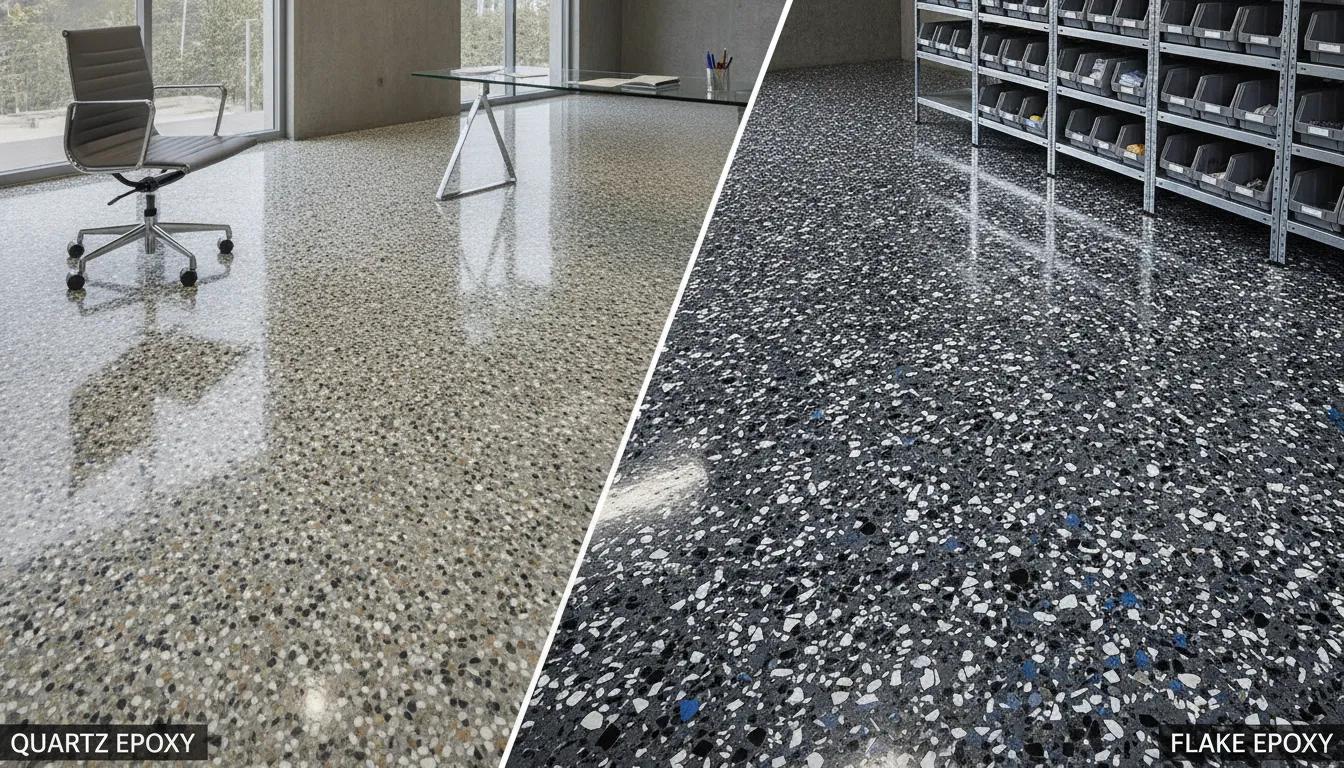
A floor that looks good in a sample may not be the right choice for a busy kitchen, warehouse, or retail space. To choose confidently, consider the conditions the surface will face every day, from moisture and spills to carts, equipment, and regular cleaning. Comparing quartz epoxy flooring vs flake epoxy flooring can help you understand how each system’s decorative material affects its appearance and feel. Quartz creates a granular finish that may suit areas where added texture matters. Flake systems offer a broad range of colors and patterns for spaces where design also counts. The best option depends on the full coating system and the needs of your property.
Key Takeaways
- Choose a finish that fits your design goals: Quartz creates a consistent, textured look, while flakes offer more varied color patterns.
- Match the system to daily conditions: Factor in moisture, traffic, spills, cleaning products, and traction needs for each area.
- Get a site-specific recommendation: Ask about concrete preparation, coating layers, topcoat, installation timing, and care requirements before comparing estimates.
Quartz vs. Flake Epoxy Flooring: What’s the Difference?
Quartz and flake flooring systems both combine a resin coating, decorative material, and protective topcoat. The main differences are the material broadcast into the coating and the look and texture it creates. Either can suit a commercial or industrial floor when the system matches the concrete, daily use, and cleaning requirements. Alliance Epoxy Flooring installs colored quartz and decorative flake systems for a range of commercial spaces.
Compare colored quartz aggregate and decorative vinyl flakes
Quartz flooring uses small pieces of colored mineral aggregate broadcast into a resin base. The particles create a consistent, speckled finish with a firm texture. Depending on the aggregate and topcoat, the surface can be specified to provide traction in areas exposed to moisture or spills.
Flake flooring uses colored vinyl chips broadcast across a tinted base coat. The flakes create a varied, stone-like pattern, with blends and sizes that allow for more design choices. This finish can suit garages, retail areas, and other spaces where appearance matters alongside durability. Both systems come in a range of colors, but their patterns and textures differ. Review examples of quartz and flake finishes to help define the look you want.
Compare installation methods
Both systems require concrete preparation before coating. A contractor may grind the surface, repair cracks, and address other defects so the coating can bond properly. The installer then applies a resin base coat and broadcasts the decorative material across it.
For a flake system, vinyl chips are distributed over the tinted base coat. After curing, loose flakes are removed and the surface is scraped or ground as needed before the topcoat is applied. For a quartz system, colored aggregate is broadcast into the base coat and sealed with a protective finish. The aggregate size and application method influence the final texture. Product specifications and site conditions affect the exact process, so ask the installer to explain each step. This overview of flake and quartz applications offers a useful comparison.
Understand the epoxy base and protective topcoat
The decorative material is only one part of the floor. The base coat bonds the system to properly prepared concrete, while the topcoat protects the surface from wear, spills, and routine cleaning. Although these systems are often called epoxy flooring, product chemistry can vary. Depending on the application, a system may use epoxy, polyurea, or another resin, with a compatible protective finish.
Ask your contractor to identify the proposed products and explain how they perform in your facility. A kitchen may need different resistance to moisture, chemicals, and cleaning products than an office or warehouse. Flooring should be selected around the work taking place in the space, not appearance alone. Commercial flooring guidance emphasizes matching flooring requirements to the conditions and demands of the facility.
How Do Appearance, Texture, and Traction Compare?
Quartz and flake systems both add color and texture to concrete, but they create different looks and levels of grip. Consider the room’s style, foot traffic, and exposure to moisture when comparing options.
Compare colors, patterns, and finishes
Flake flooring offers a decorative, varied appearance. Installers broadcast colored vinyl flakes over a tinted base coat, then scrape the surface smooth and seal it with a clear topcoat. Different flake colors and sizes can create stone-like or terrazzo-style patterns, with blends to suit a garage, retail space, or office. Explore how flake finishes create varied patterns.
Quartz flooring typically has a more consistent, matte appearance. Colored quartz aggregate creates an even finish, and blends can be selected to complement the space. Both systems offer design choices, but flake tends to make a more pronounced decorative statement, while quartz often suits facilities looking for a uniform, hard-wearing surface. Alliance Epoxy Flooring can help you compare finishes through its commercial epoxy flooring options.
Compare texture and slip resistance
Flake systems generally feel smoother underfoot while still providing some texture. Quartz systems tend to feel rougher because the exposed aggregate creates a grittier surface. That added texture may be useful in areas where floors are regularly exposed to water, such as kitchens, restrooms, and locker rooms. You can compare the feel of quartz and flake finishes when considering which surface suits your space.
Neither finish guarantees a particular level of slip resistance. Traction depends on the aggregate, how it is applied, the topcoat, and the conditions on the floor, including water, grease, and cleaning products. Discuss your facility’s hazards and cleaning routine with your flooring contractor before choosing a texture.
See how topcoats and aggregate affect traction
The decorative material is only one part of the finished system. In a quartz installation, crushed quartz aggregate is broadcast over the base coat and sealed with a protective topcoat. The aggregate contributes to the gritty feel, while the complete system determines the final surface. Learn more about how quartz flooring is applied.
A flake floor can also be adjusted for added grip. A traction additive in the topcoat can create a rougher surface without using a full quartz finish. Keep in mind that more texture may affect how easily the floor can be cleaned. Ask your contractor how the proposed aggregate and topcoat will perform in your space, particularly if the floor faces frequent moisture, spills, or washdowns.
Which System Fits Your Commercial Space?
Choose a flooring system based on how each area operates, not appearance alone. Moisture, foot and vehicle traffic, spills, cleaning products, and safety needs all affect which finish makes sense. Quartz and flake systems can both suit commercial spaces, but the right aggregate, coating layers, and topcoat depend on conditions at the site.
Choose quartz for kitchens, cafeterias, locker rooms, and restrooms
Quartz flooring is worth considering in areas where moisture and frequent cleaning are common. Its colored aggregate can create a textured surface that supports traction when the system is designed for the space. That can make it a good fit for commercial kitchens, cafeterias, locker rooms, and restrooms, where wet floors may present a slip hazard.
Performance depends on the complete system, including the aggregate, coating layers, and topcoat. For food preparation areas, confirm that the selected materials and cleaning requirements meet your facility’s needs. Sherwin-Williams’ guidance on commercial flooring requirements recommends matching flooring to safety, chemical exposure, and industry requirements. Alliance Epoxy Flooring offers epoxy flooring systems for demanding environments.
Choose flake for offices, retail spaces, and garages
Flake epoxy offers a decorative, customizable finish for offices, retail stores, showrooms, and garages. Vinyl flakes come in a range of colors and sizes, making it easier to coordinate a floor with a brand palette or create a more subtle look. The patterned surface can also help make everyday dust and minor marks less noticeable between cleanings.
In customer-facing areas, choose a color blend and texture that suit the space while remaining practical to maintain. For garages, consider vehicle traffic, dirt, and possible oil or chemical spills when selecting the coating system. Flake flooring can work in commercial settings, but its layers and topcoat should be specified for the demands of the site. Review Alliance’s flooring services to see options for different property types and uses.
Match the system to moisture, traffic, spills, and cleaning needs
Start by listing the conditions each area faces. A busy kitchen may need a different texture and chemical resistance than a dry office corridor. A warehouse or garage may see carts, vehicles, equipment, and dropped tools, while a restroom needs a surface that can handle moisture and regular washing. These factors help determine the aggregate, coating layers, and topcoat.
Consider cleaning practices, too. Check that the system can withstand the detergents, degreasers, or disinfectants your staff use, and ask about routine care. Texture can support traction, but no floor finish is slip-proof, so spills still need prompt attention. A site assessment can help identify concrete conditions and match the flooring to daily operations.
How Do Durability and Maintenance Compare?
Compare wear, impact, and chemical exposure
Both quartz and flake epoxy floors can handle heavy commercial use when the system suits the space and the concrete is prepared properly. Quartz systems often include multiple layers of aggregate, which can help them resist impact and abrasion in demanding areas. Flake systems also provide a durable finish, but the full coating system, including the base layers and topcoat, determines how well it performs.
Consider what the floor encounters each day: rolling carts, dropped tools, moisture, oils, or cleaning chemicals. Chemical resistance varies by product, so compare manufacturer specifications with the substances used at your facility. Sherwin-Williams’ guide to commercial and industrial flooring explains why matching a flooring system to site conditions matters for long-term performance.
Clean routinely and inspect periodically
Regular cleaning helps protect either finish. Sweep or dust mop to remove grit, then clean with a mild product approved for the coating. In kitchens, warehouses, and other busy spaces, promptly remove spills and follow facility sanitation procedures. Avoid harsh cleaners unless the flooring manufacturer confirms they are compatible with the system.
Schedule periodic inspections, too. Check for chips, cracks, worn areas, or places where the coating may be separating from the concrete. Focus on doorways, work zones, and areas exposed to standing water or frequent washing. Epoxy floor maintenance guidance offers a useful general checklist, but follow the care instructions for your specific floor.
Plan for repairs, recoating, and service life
Even a well-installed floor can show wear over time, especially in high-traffic areas. Repairing small chips or damaged spots early may help keep moisture and debris from reaching the concrete. If you notice widespread wear, peeling, or recurring damage, have a flooring professional assess the coating and slab before deciding whether a repair or new topcoat is suitable.
Both quartz and flake systems can be repaired or recoated, but the right method depends on the product, the extent of damage, and the preparation needed. Keep installation records, product specifications, and notes about cleaning and repairs to guide future decisions. Alliance Epoxy Flooring offers commercial and industrial flooring services and can assess your concrete, traffic, cleaning routine, and exposure to chemicals when recommending a system.
How Do Installation and Costs Compare?
Quartz and flake floors both rely on sound concrete preparation and a compatible coating system. Your project’s cost and schedule will depend on the slab’s condition, moisture levels, repair needs, and the products specified. Compare proposals by looking at the full installation scope, not just the decorative material.
Prepare concrete and test for moisture
Before either system goes down, the concrete needs to be clean, sound, and properly prepared. Installers typically grind the surface to remove contaminants and help the coating bond, then repair cracks, pits, or other damage. Moisture testing is also important because moisture moving through a slab can affect adhesion and floor performance. If test results show a concern, the project may need a moisture-control layer or a different coating specification.
Ask your contractor how they will assess the slab and what steps they recommend if they find moisture or damage. Preparation can vary from one area of a building to another, so a site-specific plan matters. Review the proposed epoxy flooring system alongside your concrete conditions and the demands of the space.
Compare application steps, cure time, and downtime
A flake system typically starts with a tinted base coat. Installers broadcast decorative vinyl flakes into it, scrape the cured surface smooth, and apply a clear protective topcoat. A quartz system uses colored quartz aggregate broadcast into a coating layer, followed by a durable topcoat. The exact layers and application methods depend on the products and performance requirements. See how flake and quartz applications differ when comparing specifications.
Cure time varies with the coating products, temperature, humidity, and number of layers. Confirm when the floor can handle foot traffic, equipment, or vehicle loads, and plan for any time the area must remain closed. For kitchens, warehouses, and retail spaces, coordinate the schedule with deliveries, shifts, and cleaning routines.
Assess cost factors, project scope, and long-term value
There is no reliable price based on finish type alone. Flake may cost less for some projects, while quartz can use more aggregate and take longer to install. However, residential garage pricing is not a dependable guide for a commercial or industrial floor. Square footage, concrete repairs, moisture controls, system thickness, topcoat, and site access all affect the final estimate. These cost factors for flake and quartz flooring provide context, but a site assessment is needed for accurate pricing.
When reviewing estimates, check that each one includes preparation, repairs, coating layers, and moisture mitigation where needed. Ask about maintenance requirements and how repairs would be handled. A system with a higher upfront cost may offer better value if it fits your traffic levels, cleaning practices, and expected service life.
What Should You Specify Before Choosing?
Before selecting quartz or flake epoxy, spell out what the floor must handle each day. A kitchen with frequent washdowns has different needs from an office or retail space. Give your contractor a clear picture of the conditions, cleaning routine, appearance goals, and operating schedule so they can recommend a system suited to the site.
Specify traction, food-safe performance, and cleaning compatibility
Explain where spills occur, how often floors get wet, and how much foot or cart traffic each area receives. In kitchens, cafeterias, locker rooms, and restrooms, ask how the proposed finish will provide traction under expected conditions. Quartz may be a suitable choice for wet, busy areas, but performance depends on the aggregate, texture, and protective topcoat. Ask about the finished surface, not just the system name.
For food-handling areas, request documentation that confirms the complete system is appropriate for its intended use. Also check that it can withstand your cleaning products, washdowns, and temperature conditions. Alliance Epoxy Flooring offers commercial epoxy flooring systems with options for demanding spaces, including food-safe kitchen coatings and slip-resistant finishes.
Choose colors, flake size, quartz blend, and finish
Consider how the floor will look alongside walls, equipment, fixtures, and lighting. Flake systems offer a range of decorative color blends and flake sizes, while quartz systems have a more granular appearance. Ask to see samples in the space where they will be installed, since lighting can change how colors and textures look.
Discuss the finish, too. Sheen and texture affect the overall appearance, and a highly textured surface may require a different cleaning approach than a smoother one. Review samples with your contractor and consider how the selected color and pattern will look across the full floor. Alliance Epoxy Flooring can help you compare epoxy flooring options based on your design preferences and the demands of the space.
Review product specs, warranties, and installer experience
Request product specifications that describe the system’s layers, intended uses, and limits for exposure to chemicals, moisture, and heat. Read the warranty closely. Confirm its duration, what it covers, which conditions could affect coverage, and who to contact if an issue arises. Get important details in writing.
Ask the installer about experience with spaces that have similar traffic and operating conditions. Find out how the team will assess and prepare the concrete, since the condition of the surface and the quality of preparation affect the finished floor. Request relevant project examples or references. Alliance Epoxy Flooring provides commercial and industrial flooring services, and its team can discuss the needs of your property and the proposed system.
Set a maintenance plan for the space
Agree on a cleaning and inspection routine before installation. Ask which cleaning products and tools are suitable, how often to remove dirt and spills, and how to handle stubborn marks. Regular cleaning helps prevent the buildup of dirt, stains, and contaminants. Request care instructions for the specific coating and finish, rather than relying on general guidance for epoxy floors.
Plan periodic inspections of busy routes, joints, drains, and areas around equipment. Ask how to address wear or damage, what repairs may involve, and whether the floor can be recoated over time. The plan should fit your traffic levels, cleaning schedule, and exposure to spills. For spaces where polished concrete is also under consideration, compare its care requirements with those of the proposed epoxy system by reviewing Alliance Epoxy Flooring’s concrete polishing service.
Which Quartz or Flake Epoxy System Fits Your Property?
Prioritize safety, durability, appearance, or budget
Start with the conditions your floor faces every day. In wet or high-traffic areas, traction and wear resistance may matter more than a smooth finish or a specific decorative look. Quartz systems can be designed with a textured surface for spaces such as commercial kitchens, locker rooms, and restrooms. Flake systems offer varied colors and patterns, making them a popular choice for offices, retail spaces, and garages where appearance and routine cleaning are priorities.
Budget is important, but weigh upfront cost against the demands of the space. Frequent spills, heavy equipment, and intensive cleaning can call for a more robust system. Define your needs for slip resistance, chemical exposure, and maintenance before choosing a finish. Commercial flooring requirements differ by application, so account for the people, processes, and safety standards specific to your property.
Compare complete systems, not just decorative materials
Quartz and vinyl flakes create the floor’s visible pattern, but they are only part of the system. Concrete preparation, primer or base coat, aggregate size and quantity, and protective topcoat all influence the floor’s texture, durability, and cleanability. Two floors with the same decorative material can perform differently when their coatings or surface profiles are not the same.
Ask contractors to explain every layer they recommend and why it suits your space. Clarify how the system will handle expected traffic, spills, cleaning products, and moisture. For a commercial kitchen, for example, confirm that the specified coating meets your operational and cleaning requirements. Alliance Epoxy Flooring installs epoxy flooring systems tailored to commercial and industrial environments, with options for demanding conditions.
Get a site-specific recommendation for your concrete and needs
A sound recommendation starts with an assessment of the space and its concrete. Tell your contractor how the area is used, where water or chemicals may collect, what equipment crosses the floor, and how often it is cleaned. The contractor should inspect the concrete and consider moisture, cracks, existing coatings, and surface contamination, since these conditions can affect preparation and installation.
Share your priorities, including traction, appearance, downtime, maintenance, and budget. Ask how the finished surface will feel underfoot, which cleaning methods it can withstand, and how repairs would be handled. One system may not suit every area in a facility. A site assessment can help identify a coating and texture that fit both the concrete and the way your property operates.
Frequently Asked Questions
Is quartz or flake epoxy better for a commercial floor?\ Neither is best for every space. Quartz may suit areas that need a textured finish, while flake offers more pattern and color options. Choose based on traffic, moisture, cleaning methods, and the floor’s appearance goals.
Does quartz flooring always provide better slip resistance?\ Not automatically. Traction depends on the aggregate, how it is applied, the topcoat, and conditions such as water or grease on the floor. Ask your contractor to specify a finish for your facility’s risks and cleaning routine.
Can flake flooring be used in a commercial kitchen?\ It may be an option, but the complete coating system must suit the kitchen’s moisture, cleaning products, and operating conditions. Confirm that the materials meet your facility’s requirements before choosing a finish.
How long does installation take, and when can the floor be used?\ The schedule depends on concrete repairs, moisture conditions, coating products, and curing requirements. Ask your installer when the area can reopen to foot traffic, equipment, or vehicles, and plan around those milestones.
What should I compare when reviewing flooring estimates?\ Look beyond the decorative material. Compare concrete preparation, repairs, moisture controls, coating layers, topcoat, installation schedule, and care instructions. A site assessment can help confirm that each proposal addresses your property’s specific needs.